
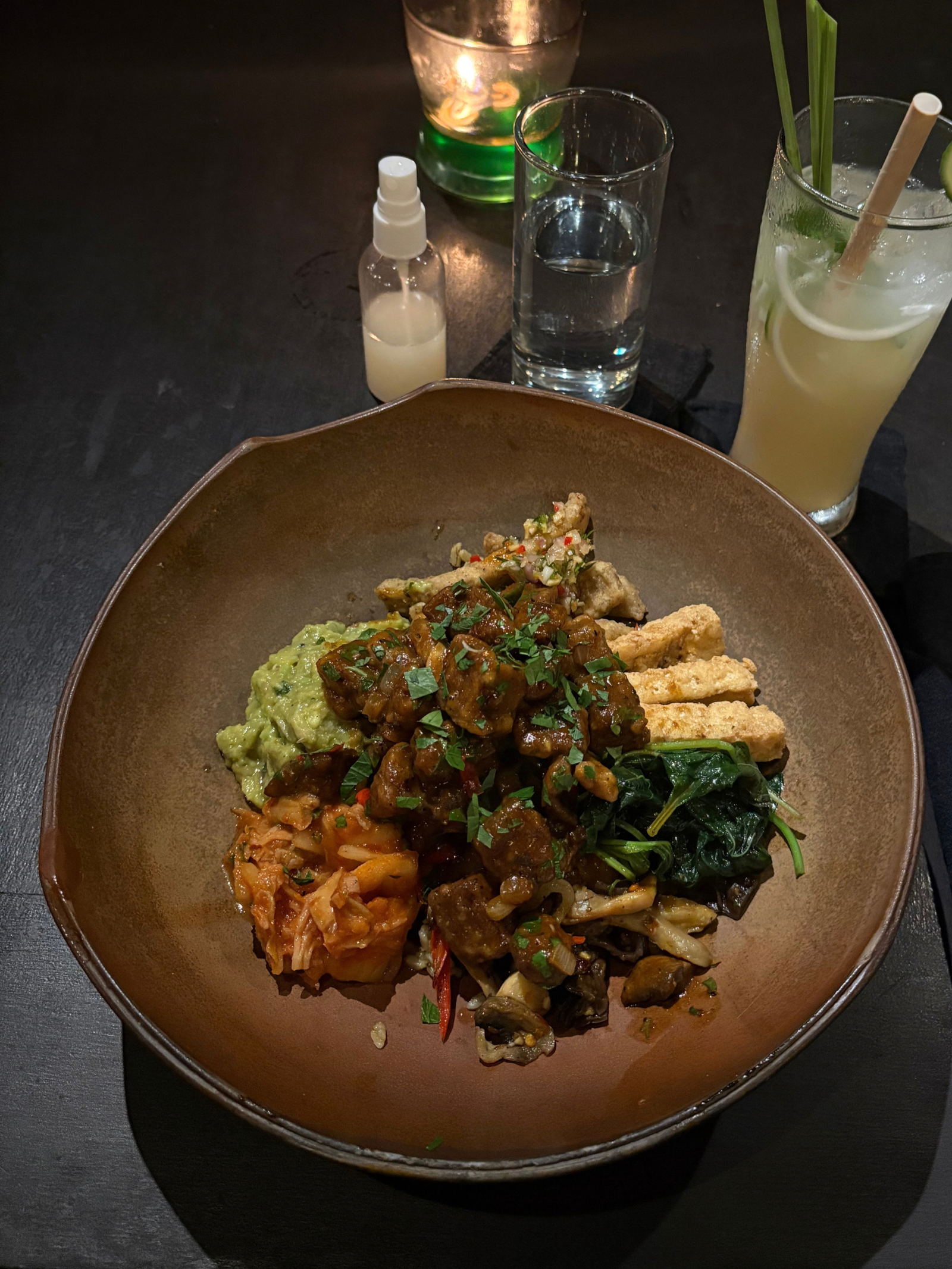
I was already vegetarian the first time I came to Indonesia in 2015, so as far as I know, I’ve never eaten meat here.
Vegetarian food in Indonesia is easier to find than many first-time visitors expect, but that doesn’t mean ordering has always been straightforward. I’ve had several situations where I asked whether a dish contained meat, was told no, and then saw chicken when the food arrived. When I asked what it was, the answer was simply ayam — chicken.
There can be a bit of a language difference here. If you ask “Ada daging?”, some people may understand daging as beef or red meat rather than using it as a general category for every kind of animal meat. Chicken is ayam, fish is ikan, and they may be thought of separately when someone is answering your question.
So if you’re vegetarian or vegan in Indonesia, being specific helps a lot.
Apart from that, I’ve found Indonesia fairly easy as a vegetarian, especially if you eat eggs. Tofu and tempeh are everyday ingredients, vegetables are widely available, and rice accompanies almost everything. You don’t have to spend your whole trip searching for restaurants labelled “vegetarian”.
You just need to know what to look for.
In this guide
What does a balanced vegetarian meal look like in Indonesia?
For a proper meal, I usually look for three things: a carbohydrate, a source of protein, and vegetables.
Rice is the obvious carbohydrate and by far the easiest to find. Depending on the dish, you’ll also come across lontong or ketupat, both made from rice, noodles, potatoes, corn and occasionally cassava.
For protein, tempeh is probably the most useful ingredient to know. Indonesia is its home, and you’ll find it almost everywhere. Tofu is just as common, and eggs make things even easier if you eat them.
Then you add vegetables. Depending on where you are, that might mean cassava leaves, water spinach, long beans, bean sprouts, cabbage, jackfruit, chayote, aubergine, pumpkin or whatever happens to be in the kitchen that day.
With that in mind, these are some of the Indonesian dishes I would look for.
10 Vegetarian Dishes to Try in Indonesia
1. A Vegetarian Nasi Padang Plate
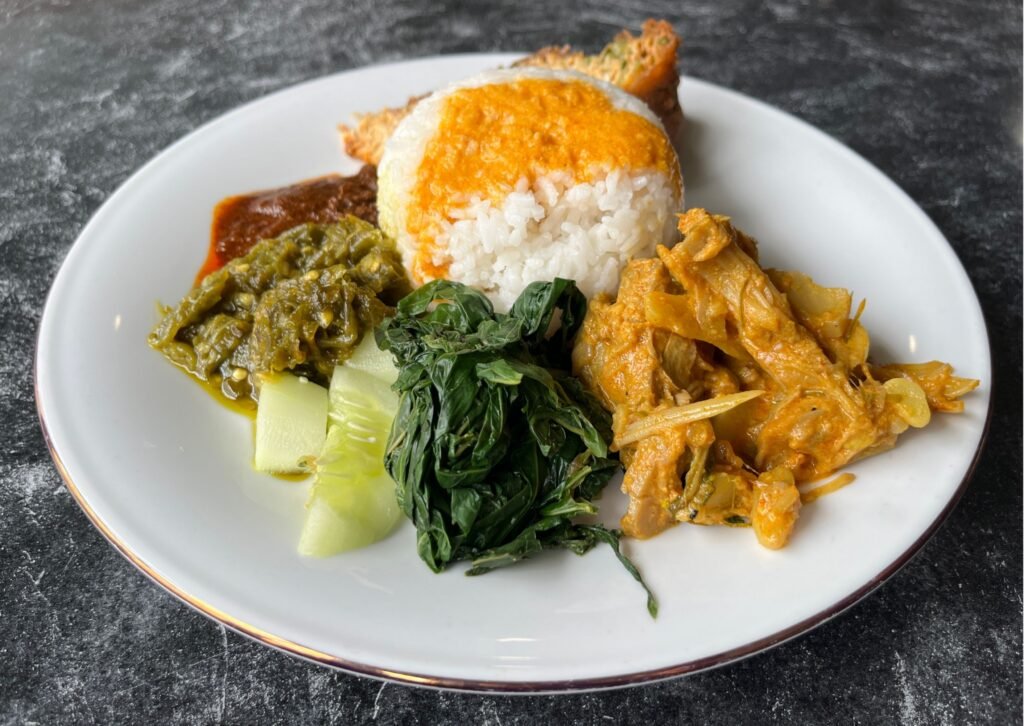
Walking into a Padang restaurant can be slightly overwhelming the first time because there may be twenty or thirty dishes staring back at you from the counter.
For a vegetarian, though, that choice is actually useful.
One of my favourite combinations is rice with gulai nangka, cassava leaves, tempeh or tofu, and sometimes an egg.
Gulai nangka is young jackfruit cooked in a rich coconut curry with spices. It’s filling, full of flavour and one of my personal favourites.
The vegetable selection differs from one Padang restaurant to another, so I usually just look at what’s available and build a plate from there.
If you are very strict about animal products, it’s worth asking about the sauces too. Padang kitchens prepare many meat dishes, and recipes for vegetable curries can vary.
2. Gudeg
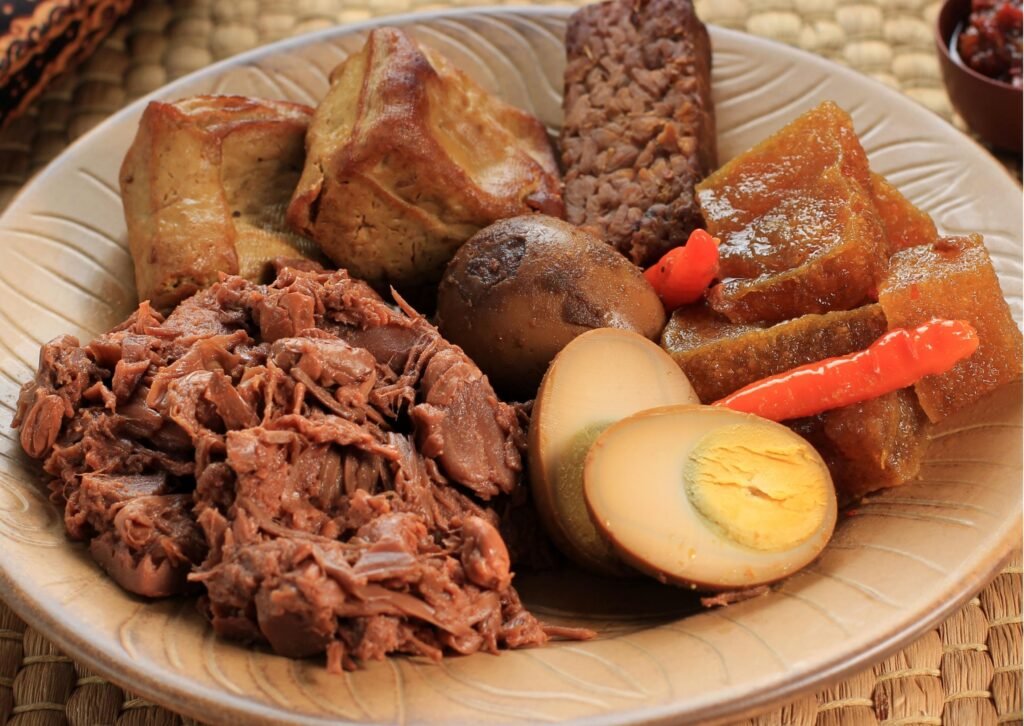
If you’re travelling through Java, food is one of the best reasons to slow the journey down. In Yogyakarta, you’re going to encounter gudeg very quickly.
Gudeg is made from young jackfruit cooked slowly with coconut milk, palm sugar and spices until it becomes very soft. It’s usually served with rice and several accompaniments.
The important thing for vegetarians is not to automatically order gudeg komplit.
The full version commonly comes with chicken and sambal goreng krecek. Krecek is made from cow skin, so despite sitting next to a pile of jackfruit, it definitely isn’t vegetarian.
Ask for:
Gudeg tanpa ayam, tanpa krecek.
That gives you gudeg without chicken or krecek, and you can choose the vegetarian sides available at the stall.
Also, a warning for people like me who don’t love sweet savoury food: gudeg can be quite sweet. Some versions are much sweeter than others, so if that flavour combination bothers you, it may take a few tries to find one you like.
3. Gado-Gado
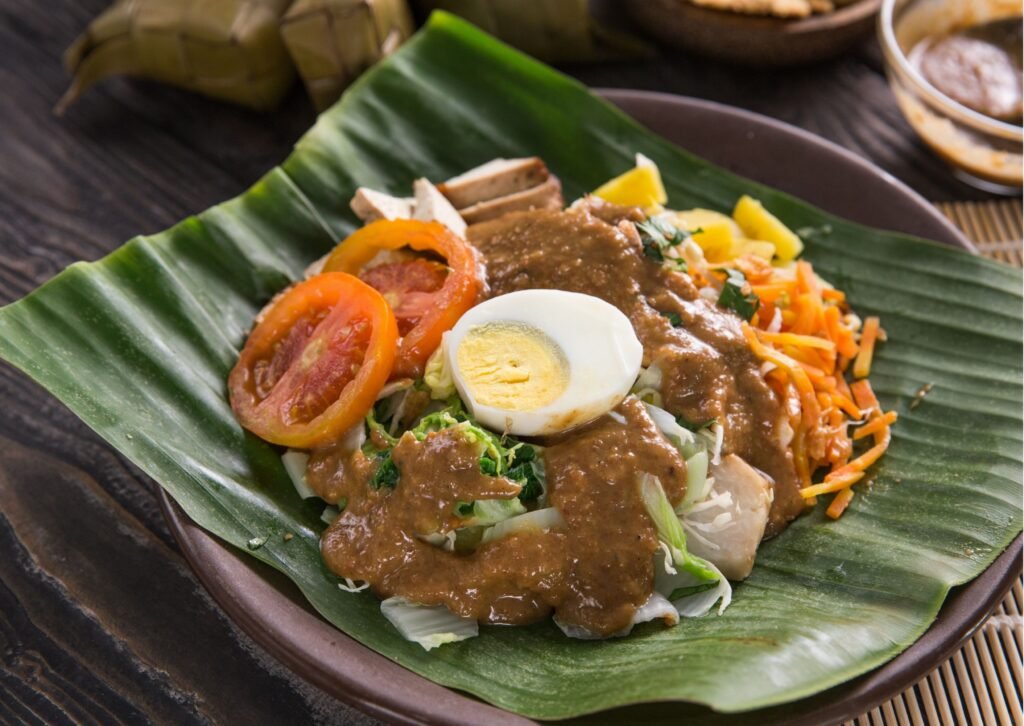
Gado-gado is probably one of the first Indonesian dishes people think of when they hear “vegetarian food in Indonesia”, and there’s a reason for that.
It’s a mixture of cooked vegetables served with tofu, tempeh, boiled egg and a thick peanut sauce. Lontong, ketupat or potatoes are often included as well, depending on the version.
It’s filling enough to be a full meal and usually easy to find.
Vegans can ask for it without egg.
The peanut sauce is the main thing to check if you are strict, since recipes vary and some may contain shrimp paste. The crackers served on top can also be shrimp-based.
And obviously, if you hate peanut sauce, this is not going to be your dish. There’s no escaping it here — the sauce is very much the point.
4. Nasi Pecel
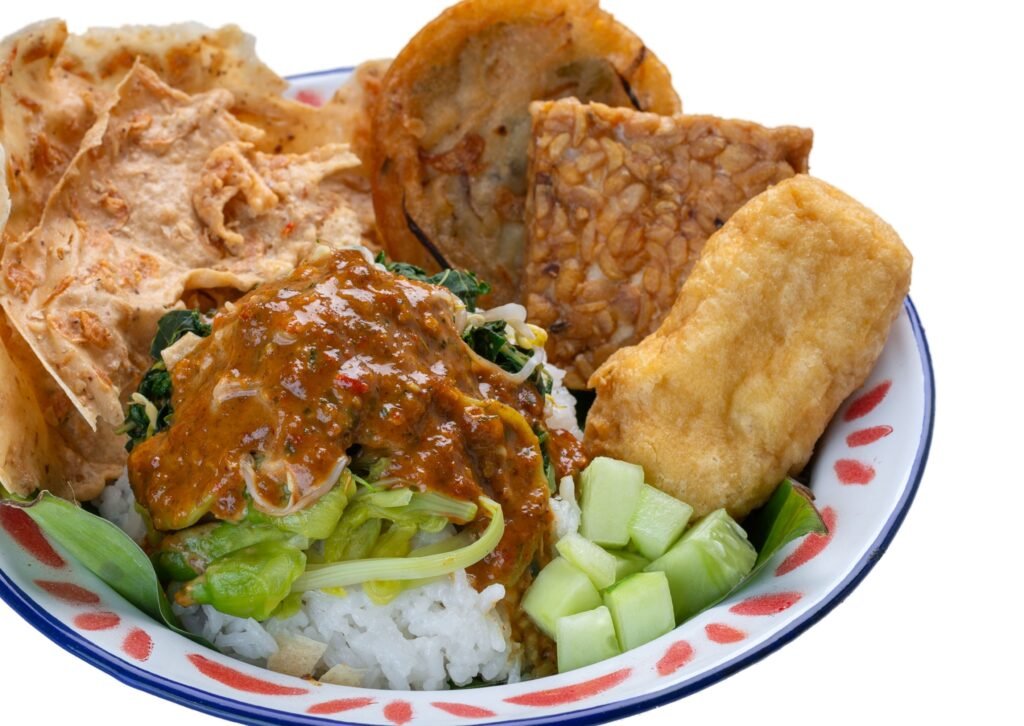
Pecel is especially common in Java and consists of cooked vegetables covered in a peanut-based sauce.
The vegetable mix often includes bean sprouts, long beans and leafy greens, and it’s usually eaten with rice. Tempeh is a very common accompaniment.
It’s a practical choice when you want something filling without ordering several separate dishes.
The sauce can be sweet as well as spicy, depending on the recipe, because palm sugar is commonly used. If you prefer savoury food without much sweetness, it’s worth knowing that beforehand.
5. Ketoprak
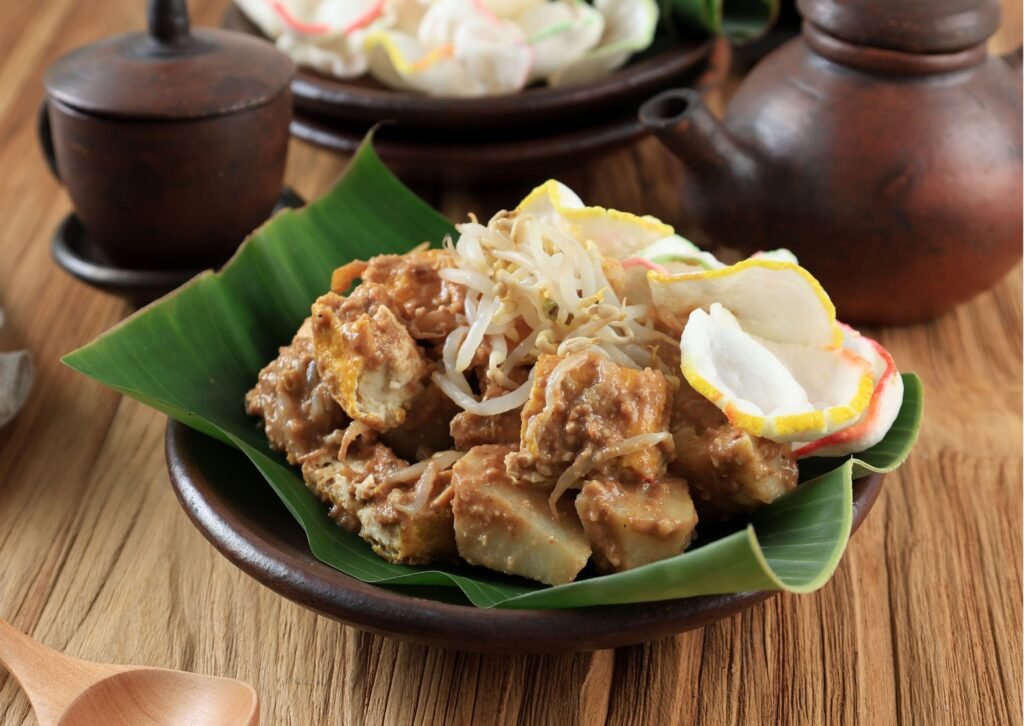
Ketoprak is particularly associated with Jakarta and is another useful dish for vegetarians to recognise.
A typical plate contains tofu, bean sprouts, rice vermicelli and lontong, all covered in peanut sauce and sweet soy sauce.
It’s fairly substantial because you’re getting both noodles and rice cake along with tofu.
Again, crackers are the thing I would check. Some vendors use plain crackers while others may serve shrimp crackers.
Ketoprak also leans towards the sweet-savoury side because of the sweet soy sauce, so keep that in mind if, like me, that isn’t your favourite flavour profile.
6. Sayur Lodeh
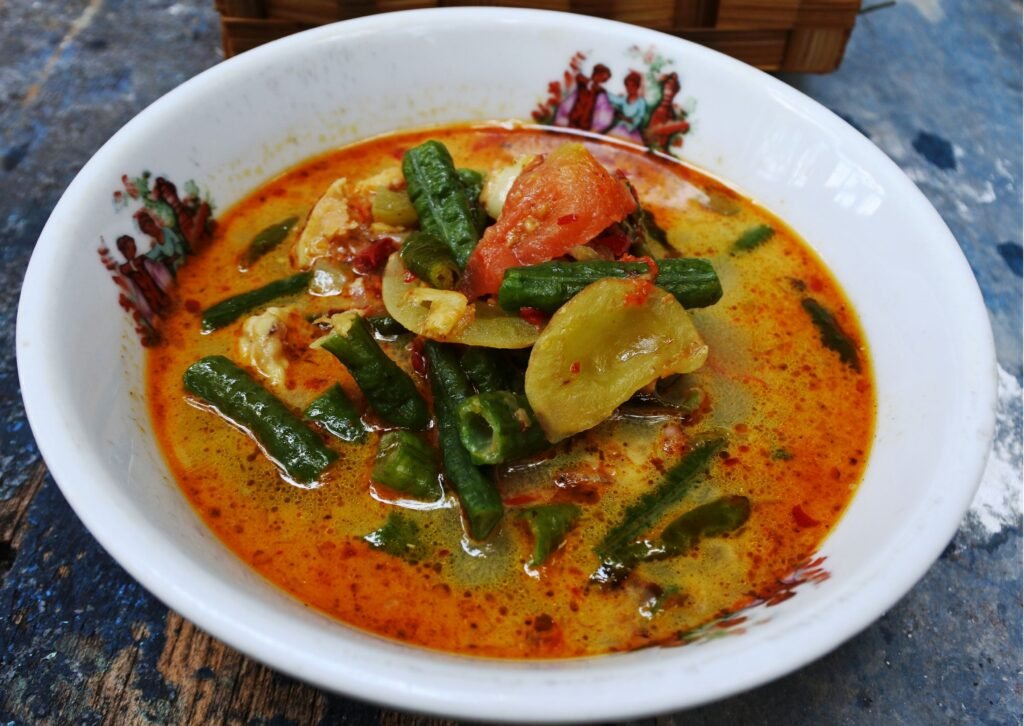
Sayur lodeh is a vegetable stew cooked in coconut milk.
There isn’t one fixed list of vegetables. Depending on the region and the cook, it may contain long beans, chayote, aubergine, corn, young jackfruit, cabbage or other vegetables.
I usually think of sayur lodeh as part of a meal rather than the whole meal. It works very well alongside rice and one or two other dishes from a warung.
The recipe is worth checking if you’re strict vegetarian or vegan because some versions use shrimp paste, dried shrimp or stock.
7. Nasi Campur or Nasi Rames
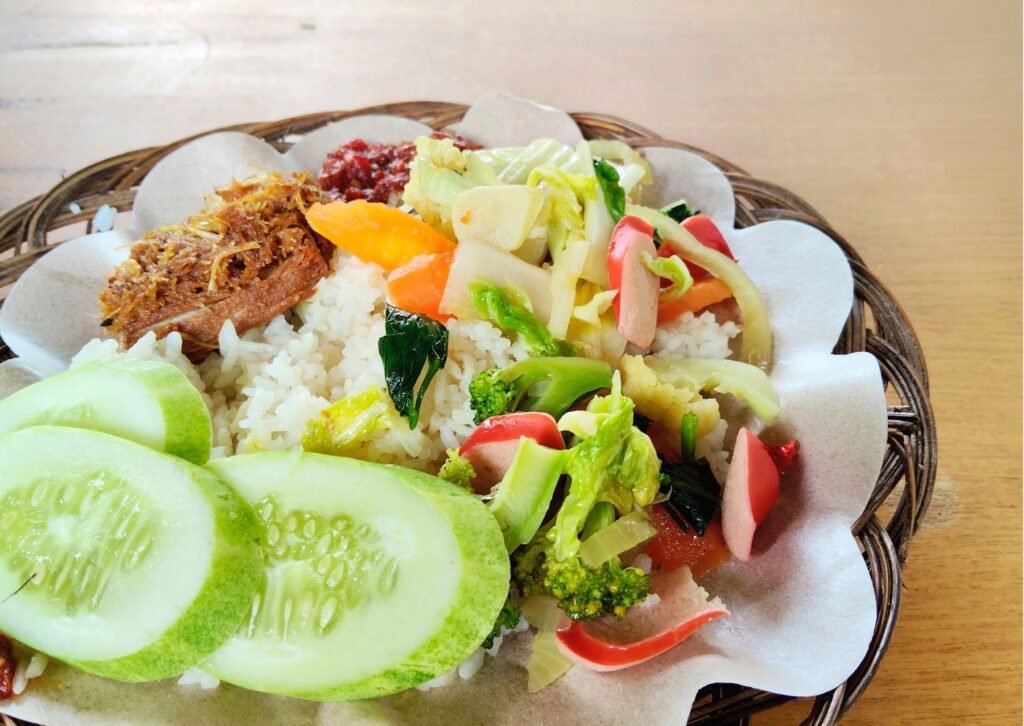
This may actually be the most useful thing to understand if you’re travelling around Indonesia as a vegetarian.
At a typical warung, you’ll often find rice with a whole selection of dishes laid out behind the counter. You point at the ones you want, and they’re added to your plate.
There’s no single recipe for nasi campur or nasi rames. That’s exactly what makes them useful.
You might find tempe orek, fried tofu, eggs, sautéed vegetables, cassava leaves, jackfruit, water spinach, green beans or several other vegetable dishes.
It’s one of the easiest ways to put together a proper vegetarian lunch without looking for a dedicated vegetarian restaurant.
You do need to ask questions, though. A tray full of vegetables can still contain shrimp paste, stock, anchovies or another animal ingredient that isn’t immediately visible.
8. Urap
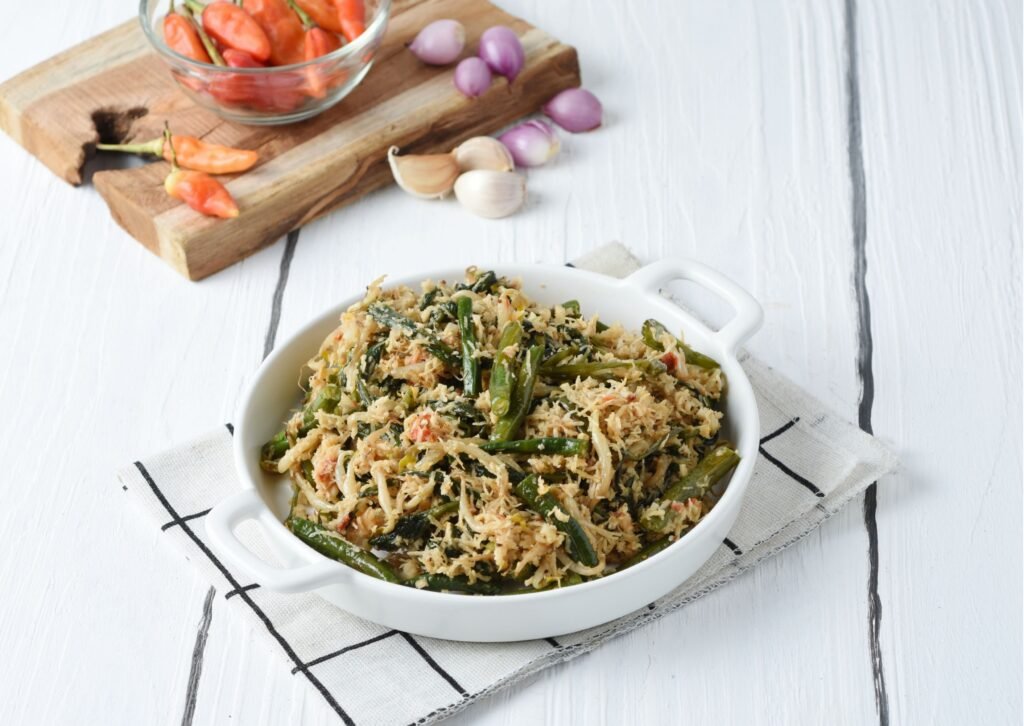
Urap is made from cooked vegetables mixed with seasoned grated coconut.
Long beans, bean sprouts and leafy greens are common, although the vegetables vary.
There is one thing I wish people mentioned more often when describing it: urap can be sweet.
The coconut mixture is often seasoned with palm sugar along with spices, chilli and aromatics. The sweetness varies a lot, and some versions are much more savoury than others, but if you strongly dislike sweet flavours in savoury food, you may want to try a small portion first.
Personally, that’s the reason urap is not high on my list, even though on paper it sounds like exactly the kind of dish I should love.
9. Tinutuan / Bubur Manado
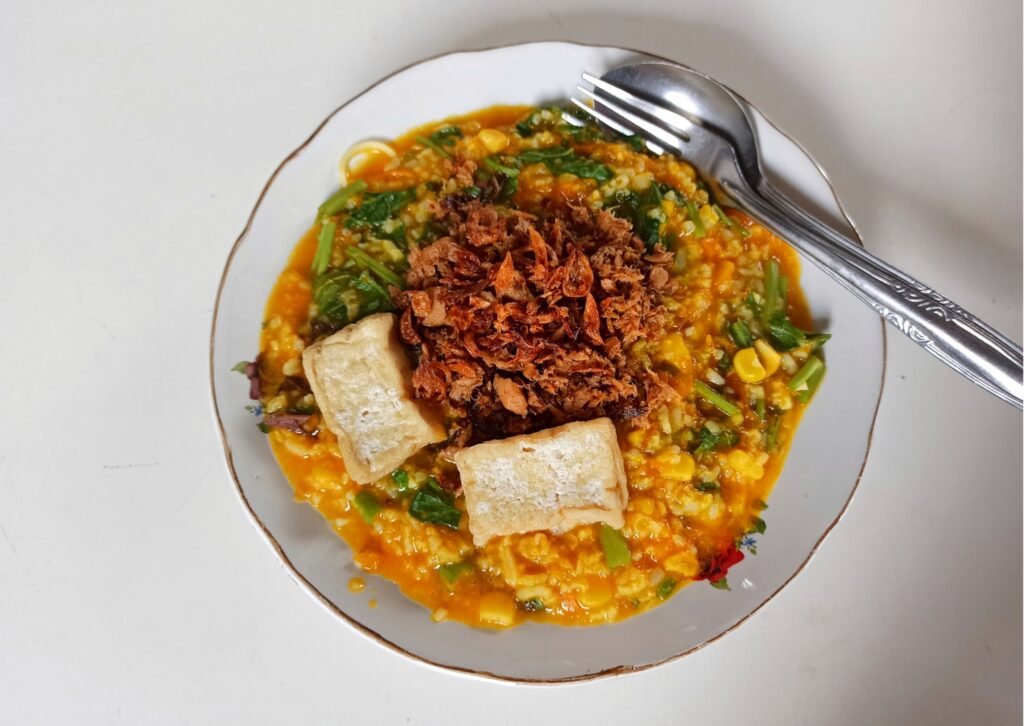
If you’re travelling in North Sulawesi, look out for tinutuan, commonly called Bubur Manado.
It’s a thick porridge made with rice and lots of vegetables, often including pumpkin, corn and leafy greens.
The porridge itself can be vegetarian, but it is commonly served with fish or other accompaniments, so make sure you specify what you don’t eat when ordering.
It’s especially good if you’ve reached the point in your trip where you want vegetables but don’t want another plate centred around peanut sauce.
10. Tempeh, Rice and Whatever Vegetables Are Available

This isn’t really one named Indonesian dish, but it deserves a place on this list because it’s probably the most realistic answer to “What will I actually eat as a vegetarian in Indonesia?”
A lot of the time, I simply order rice, tempeh and two vegetable dishes from a warung.
Tempeh might be fried, cooked in kecap, grilled, mixed with chilli or served in a curry. The vegetables change depending on where you are and what was cooked that day.
You can eat extremely well without knowing the names of every Indonesian dish in advance.
That’s one of the things I enjoy about eating vegetarian here: tofu and tempeh don’t exist as specialised meat replacements. They’re regular ingredients that everyone eats.
Ingredients Vegetarians Should Know
The bigger challenge in Indonesia is often spotting ingredients that aren’t obvious from looking at the dish.
A few words are particularly useful to recognise:
- Ayam — chicken
- Daging sapi — beef
- Daging babi — pork
- Ikan — fish
- Udang — shrimp
- Teri — anchovies
- Terasi — fermented shrimp paste
- Ebi — dried shrimp
- Kaldu ayam — chicken stock
- Kaldu sapi — beef stock
- Krecek — cow skin
Shrimp paste and anchovies are the two I would pay particular attention to because they can appear in dishes that otherwise look completely vegetarian.
What to Say When Ordering
Rather than only asking:
Ada daging?
Is there meat?
I find it clearer to explain exactly what I don’t eat.
For vegetarians:
Saya vegetarian. Tidak makan ayam, daging, ikan atau seafood.
I’m vegetarian. I don’t eat chicken, meat, fish or seafood.
For vegans:
Saya vegan. Tidak makan daging, ayam, ikan, seafood, telur atau susu.
I’m vegan. I don’t eat meat, chicken, fish, seafood, eggs or dairy.
If shrimp paste matters to you, I would add:
Tanpa terasi.
No shrimp paste.
And if cross-contamination is something you need to avoid completely, explain that separately. Traditional warungs generally prepare vegetarian and non-vegetarian dishes in the same kitchen.
Eating Vegetarian in Indonesia
After travelling around Indonesia as a vegetarian since my first trip in 2015, food is rarely something I worry about. One of the easiest ways to find vegetarian food in Indonesia is to eat at a warung where the dishes are displayed in front of you.
The main thing I’ve learned is to ask specific questions rather than assuming that a vegetable dish is automatically vegetarian. Once you know a handful of ingredients and a few dish names, ordering becomes much easier.
And considering how different the food is from Sumatra to Java, Sulawesi, Bali and the rest of the country, sticking to vegetarian food certainly doesn’t mean missing out on Indonesian cuisine.
If you’re planning a trip to Indonesia with dietary restrictions, I can also take them into account when designing your itinerary, including local dishes to look for and places where you’ll actually have something interesting to eat.