
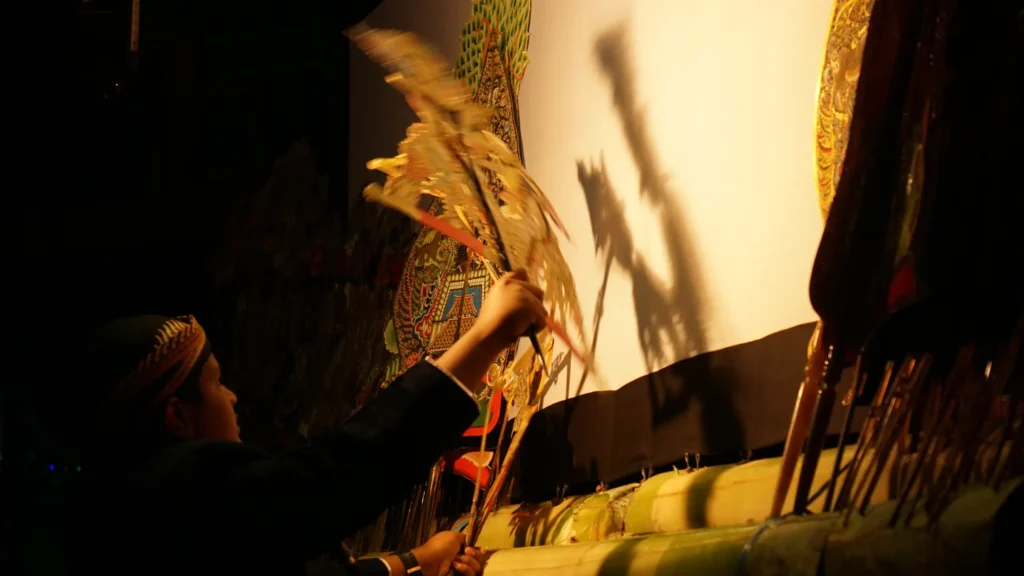
When the sun sinks beneath the rice fields of Java, a different world comes alive. A white cotton screen is set up between two poles. An oil lamp is lit. The metallic sounds of a gamelan orchestra fill the night, and shadows start to move behind the screen.
This is wayang kulit, Indonesia’s sacred shadow puppet theatre. It has fascinated audiences for centuries. Calling it just a puppet show does not capture what it really is. Wayang brings together theatre, philosophy, ritual, history, music, and spiritual reflection in one performance.
Before cinemas, television, or streaming, wayang brought communities together. People came together to share stories, consider right and wrong, celebrate special events, and reflect on their place in the world.
Table of Contents
Wayang Kulit: More Than Entertainment
In Indonesia, especially in Java, wayang has always been more than just a show. It stands between performance and ceremony.
Wayang is often performed at temple festivals, weddings, village anniversaries, or important life events. Audiences laugh at the funny characters and enjoy the legendary battles, but the show is also seen as an offering. It is a way to bring balance between the visible world and the world we cannot see.
At the heart of every performance is the dalang, the master puppeteer.
The dalang does much more than move leather puppets across a screen. They act as narrator, actor, conductor, philosopher, and spiritual guide. During a show, the dalang controls many detailed puppets, gives every one a unique voice, leads the musicians, keeps the story moving, and reacts to the audience.
It can take decades to master this art.
Stories That Traveled Across Oceans
Many of the most famous wayang stories come from the ancient Indian epics, the Ramayana and the Mahabharata. But these are not just retold as they were.
Over time, Indonesian storytellers changed these stories to fit local values, customs, humor, and beliefs. Well-known heroes adopted Javanese, and new characters appeared that were not found in the original Sanskrit texts.
Some of the most beloved characters are the punakawan, the clown-servants such as Semar, Gareng, Petruk, and Bagong. They make jokes, tease kings, question heroes, and often share the deepest wisdom of the night.
With their humor, they remind the audience that truth can originate from unexpected places. Because of these characters, the dalang can add modern social commentary to old stories. Politics, community problems, and daily life can all appear in a show that might otherwise be about events from long ago.ars ago.
Reading a Puppet
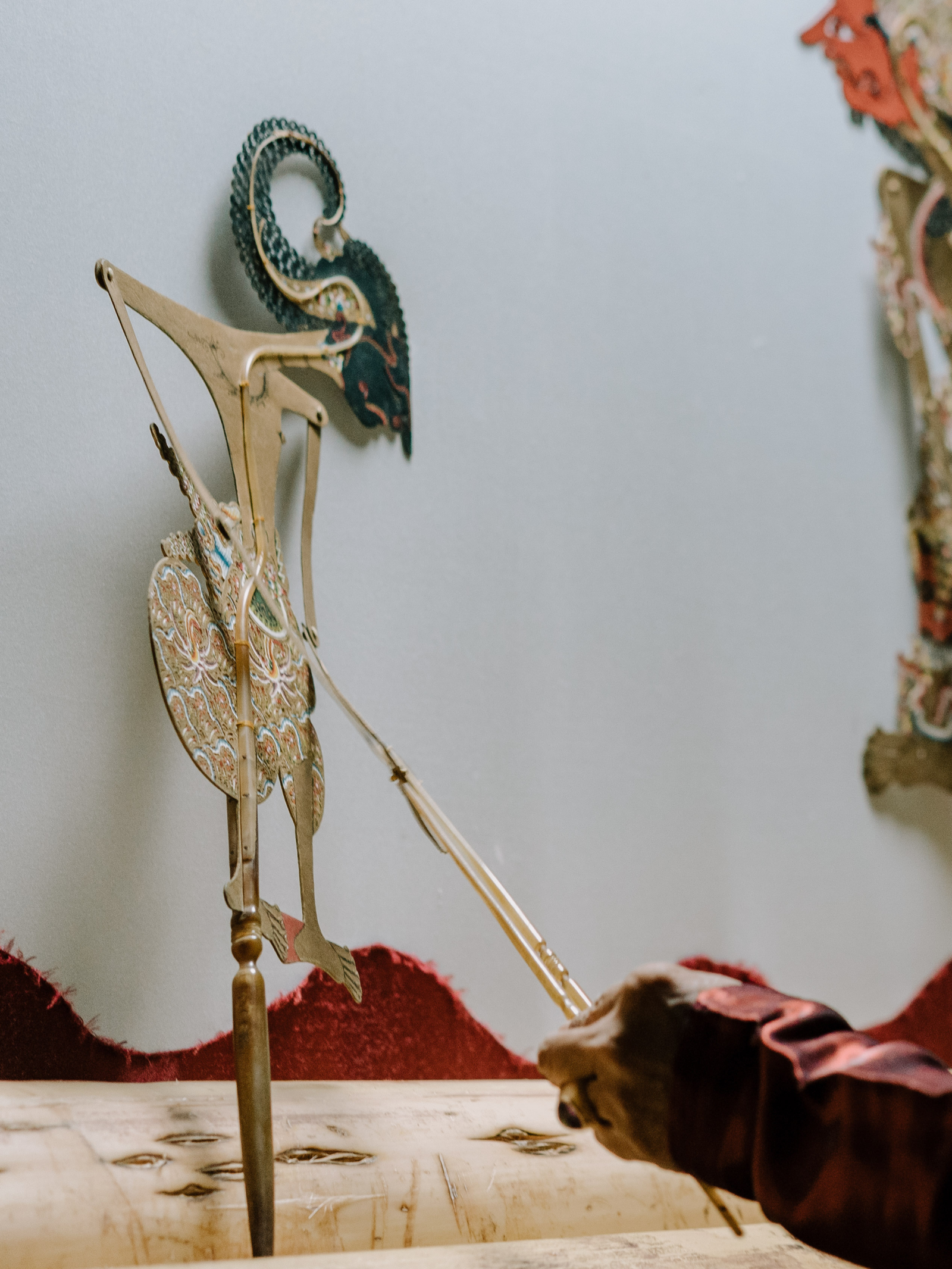
To someone new to wayang, the puppets might look exaggerated, with very long arms, sharp noses, and elegant shapes that seem impossible.
Each feature is chosen on purpose.
A refined hero is shown with lowered eyes, a gentle posture, and graceful movements that show patience and self-control. A strong warrior stands taller with broad shoulders. Giants and demons have big eyes, sharp fangs, and bold gestures that show wild desire or pride.
The puppets are not meant to look like real people. They serve as symbols that show what each character is like.
Even before anyone speaks, experienced viewers can tell who is good, who is a tempter, and who still has lessons to learn.
Light, Shadow, and Meaning
Perhaps the greatest beauty of wayang. One of the most beautiful things about wayang is its paradox. The finely carved buffalo-hide puppets remain hidden behind the screen, visible only to the dalang and musicians. What the audience experiences is not the object itself, but its projection.
This link between reality and shade has long inspired deep thought.
In Javanese thought, the visible world is often understood as only one layer of existence. Truth is rarely absolute, and wisdom comes from recognizing what lies beyond appearances. The screen itself becomes a metaphor, inviting audiences to meditate on what is seen and what remains hidden.
Even if not every show is meant to teach a spiritual lesson, the symbols in wayang still speak to people through the generations.
Wayang has deep roots in tradition, but it keeps evolving.
Some performances still last through the night. Some shows still last all night and keep old languages and rituals alive. Others use shorter formats, modern stories, new lighting, or work with digital media to connect with younger people. I’ve undergone an enormous cultural change. UNESCO recognized the Indonesian wayang puppet theatre as an element of the Intangible Cultural Heritage of Humanity, acknowledging not only its artistic excellence but also its continuing role in preserving cultural understanding and community identity.
Looking Beyond the Shadows
For many visitors, wayang is different from any other theatre they have seen. It moves at a slower pace, uses more symbols, and its meanings appear gradually rather than all at once.
But maybe that is exactly the way that wayang invites us to do.
Wayang encourages the audience to listen with patience, watch closely, and understand that answers do not always come right away. All shade hides another story. Every character teaches a lesson. Every performance carries a tradition that has brightened Indonesian culture for centuries.
In a world that wants quick entertainment, Indonesia’s sacred puppet theatre reminds us that some stories are best told slowly, one shadow at a time.