
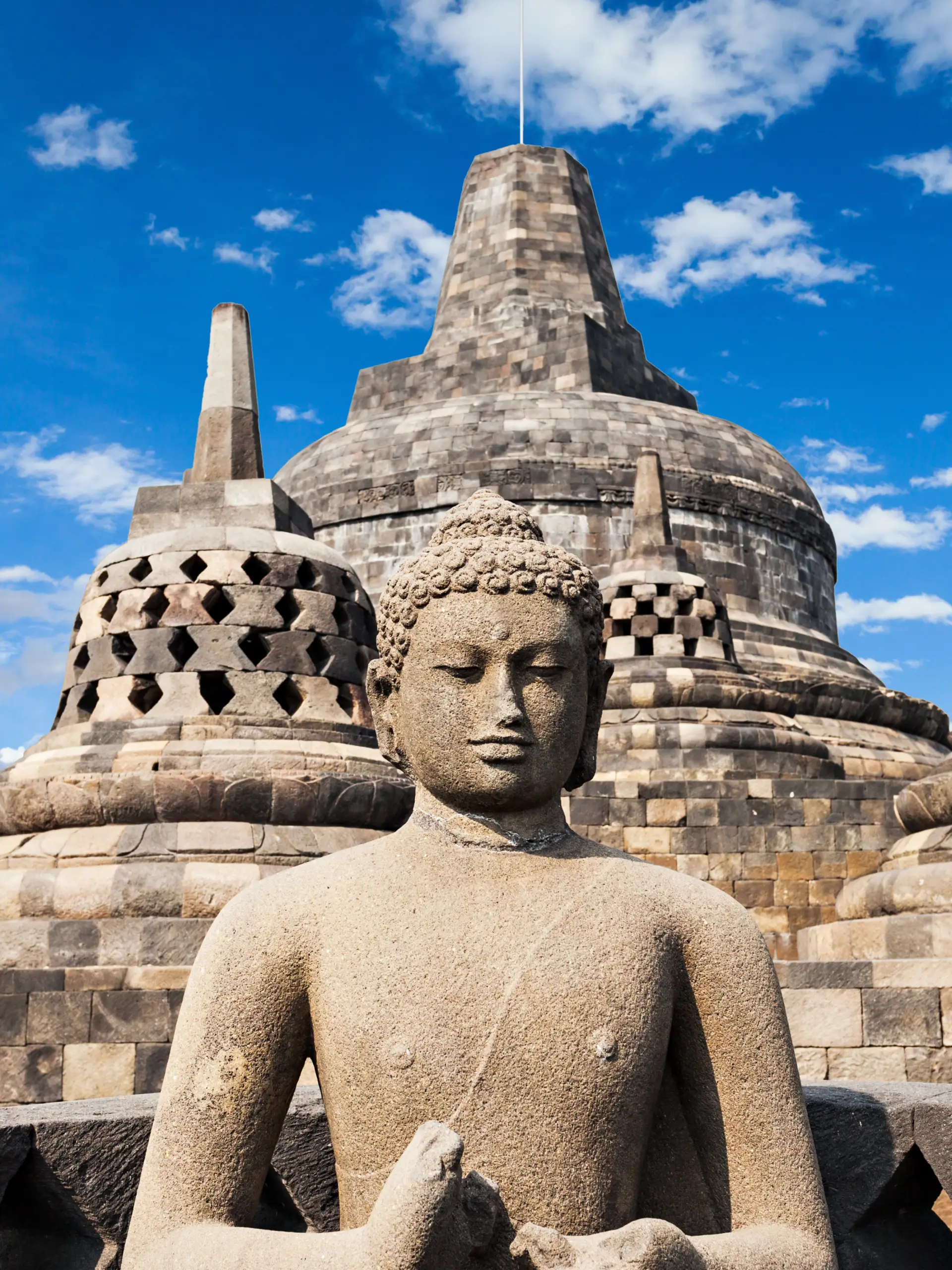
Java is the geographical and historical heart of Indonesia, a land where powerful empires once rose and fell, leaving behind some of the most magnificent religious monuments in the world. From the misty heights of the Dieng Plateau to the grand plains of Central Java, the island’s temples (known locally as Candi) are a testament to a golden age of Hindu-Buddhist civilization.
For the modern traveller, exploring these sites is a journey through time, architecture, and spirituality.
1. Borobudur: The Path to Enlightenment
A UNESCO World Heritage site and the largest Buddhist temple in the world, Borobudur is a 9th-century marvel. Built in the shape of a massive lotus flower, it was designed as a physical map of Buddhist cosmology.
- The Experience: The temple consists of nine stacked platforms. As you climb, you follow a clockwise path lined with over 2,600 relief panels depicting the life of Buddha and stories from the sutras.
- The Summit: The top level features 72 perforated stupas, each containing a statue of the Buddha.
- Pro Tip: Arrive for the sunrise. Watching the sun climb over the Kedu Plain with the silhouettes of Mount Merapi and Mount Merbabu in the distance is an unforgettable spiritual experience.
2. Prambanan: The Hindu Masterpiece
Just a short drive from Borobudur lies Prambanan, the largest Hindu temple complex in Indonesia. Built in the 10th century, it is dedicated to the Trimurti—the three expressions of God in Hinduism: Shiva, Vishnu, and Brahma.
- Architecture: The temples are characterized by their tall and slender architecture, typical of Hindu temple design. The central Shiva temple reaches a height of 47 meters.
- The Ramayana Ballet: If you visit during the dry season, stay for the evening performance of the Ramayana Ballet. It is performed on an open-air stage with the lit-up spires of Prambanan serving as the backdrop.
3. The Dieng Plateau: Temples in the Clouds
Set at 2,000 meters above sea level in a volcanic caldera, the Dieng Plateau is home to some of the oldest Hindu temples in Java.
- The Atmosphere: The environment here is ethereal, with sulfuric lakes, steaming craters, and ancient stone structures surrounded by mountain mist.
- Arjuna Complex: This group of small, square temples is dedicated to the heroes of the Mahabharata. They are simple and atmospheric compared to the grandeur of Borobudur or Prambanan.
4. Candi Sukuh & Candi Cetho: The Mystery of the Slopes
Located on the western slopes of Mount Lawu, these 15th-century temples are distinct from the classical styles found elsewhere in Java. They were built as the Majapahit Empire was beginning to decline.
- Candi Sukuh: Often compared to Mayan pyramids because of its truncated shape, it is famous for its carvings dealing with birth, sexuality, and spiritual liberation.
- Candi Cetho: Perched higher up the mountain, this temple feels like a bridge between earth and sky. Its series of terraces offer breathtaking views of the valley below, often shrouded in clouds.
5. The Temples of Trowulan: The Majapahit Legacy
Trowulan is the only city-site of the Hindu-Buddhist era found in Indonesia. It was the capital of the great Majapahit Empire, which once united much of Southeast Asia.
- Candi Tikus: A ritual bathing pool located below ground level.
- Bajang Ratu Gate: A majestic gateway made of red brick, believed to be the entrance to a sacred building now lost to time.
Practical Information for Travellers
1. Base Yourself in Yogyakarta
Yogyakarta (often called Jogja) is the cultural soul of Java and the best base for visiting Borobudur and Prambanan. It offers a wide range of accommodation, from boutique heritage hotels to budget-friendly guesthouses.
2. Dress Code and Etiquette
- Modesty: As these are sacred sites, visitors are expected to dress modestly. Shoulders and knees should be covered.
- Sarongs: Many temples (like Borobudur) provide a specific batik sarong as part of the entrance fee which you must wear while on the structure.
- Photography: While photography is allowed, be respectful of those who have come to pray. Do not climb on the stupas or touch the carvings.
3. Transportation
Hiring a private driver for the day is the most efficient way to see multiple temples. For the more adventurous, renting a scooter is a great way to explore the rural roads and smaller temple sites at your own pace.
Final Thoughts
Java’s temples are more than just ruins; they are living reminders of the island’s complex religious history. Whether you are a history buff, an architecture lover, or a spiritual seeker, the Candi of Java offer a profound look into the heart of Indonesian civilization.