
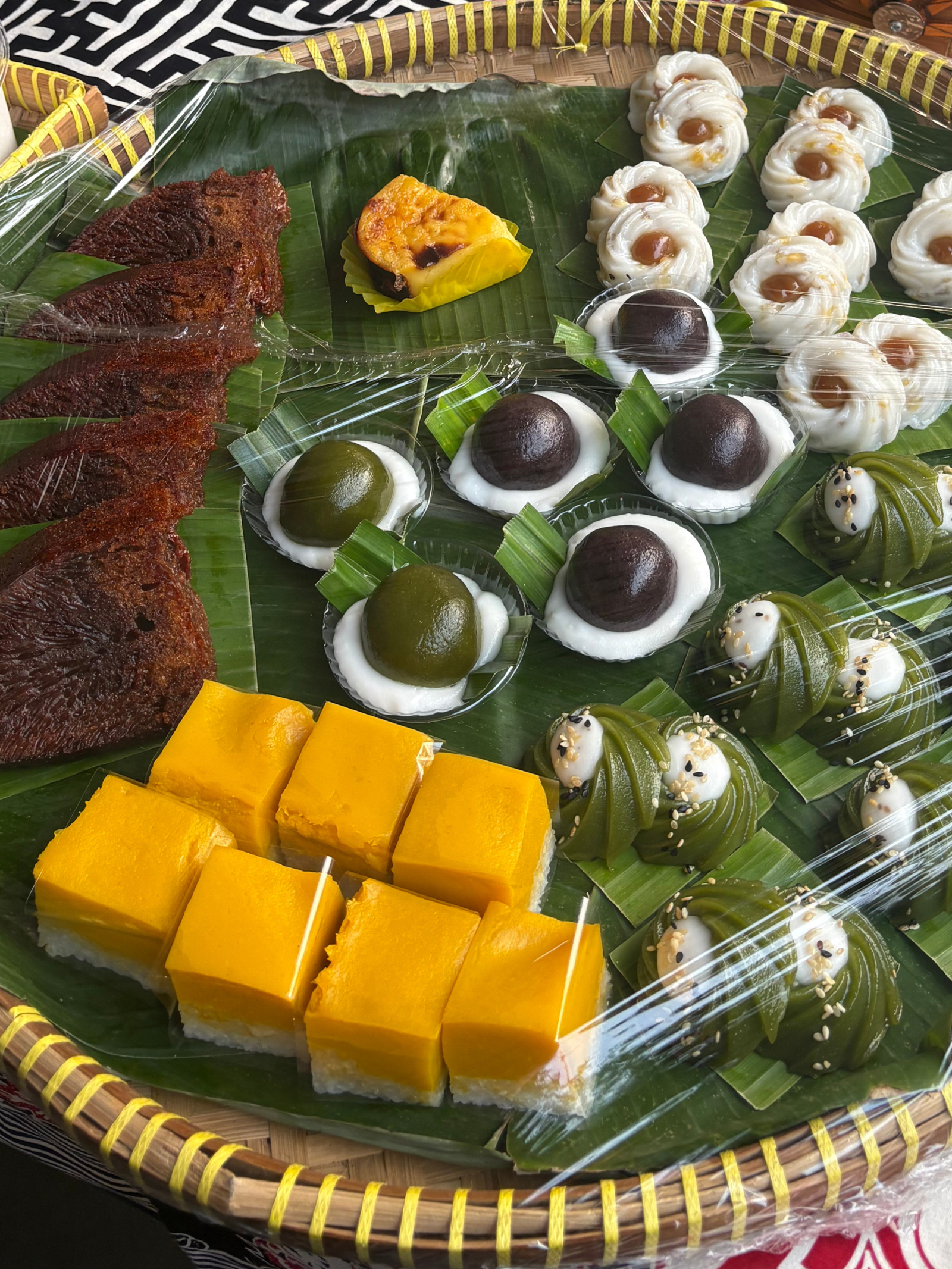
A guide to Indonesian desserts, with two sweets from each of the country’s seven broad regions
Ask for dessert in Indonesia and you may be pointed toward the market rather than the end of a meal. Many of the country’s sweets are eaten for breakfast, with coffee, during Ramadan, at weddings, or simply whenever a street vendor passes at the right moment.
That is why the word dessert only tells part of the story. Kue can mean cakes, pastries, steamed snacks, cookies, or even savory foods. Jajanan pasar are the small traditional snacks sold in markets, while takjil refers to food and drinks served to break the Ramadan fast. In Bali, you will often hear the word jaja; in Banjar communities, cakes and snacks are known as wadai.
There is no reliable national ranking of Indonesia’s “most popular” desserts, and recipes rarely stay within modern provincial borders. The 14 below are either widely recognized or particularly representative of the seven broad regions in this guide. Together, they show how rice, coconut, palm sugar, pandan, sago, eggs, fruit, and fermentation change as you travel west to east.
Table of Contents
Before we start: one sweet, several names
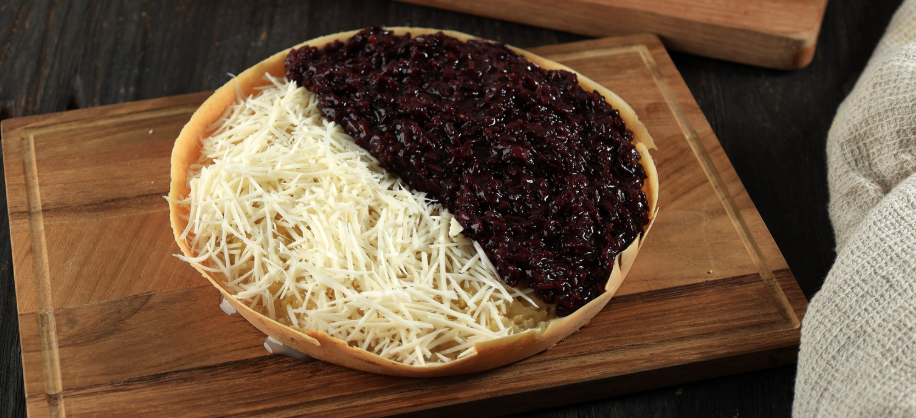
Names travel just as easily as recipes. Cendol and dawet belong to the same chilled family of green jelly, coconut milk, palm-sugar syrup, and ice, although regional versions are not identical. Lupis may be spelled lopis. The coconut-and-rice pancake called surabi in West Java is usually written serabi in Central Java, with different textures and toppings from place to place.
The reverse can also be true: similar names do not always mean the exact same cake. Bingka Banjar and Pontianak’s bingke are related egg-and-coconut bakes, but each has its own local identity. And despite its name, Bika Ambon is not from Ambon at all.
Sumatra
Sumatran sweets move from Acehnese leaf-wrapped cakes to fermented Minangkabau rice, Malay festive bakes, and the egg-rich cakes of Palembang. Glutinous rice, coconut milk, palm sugar, and durian appear repeatedly, but the results can be crisp, sticky, custardy, or full of tiny air tunnels.
Bika Ambon
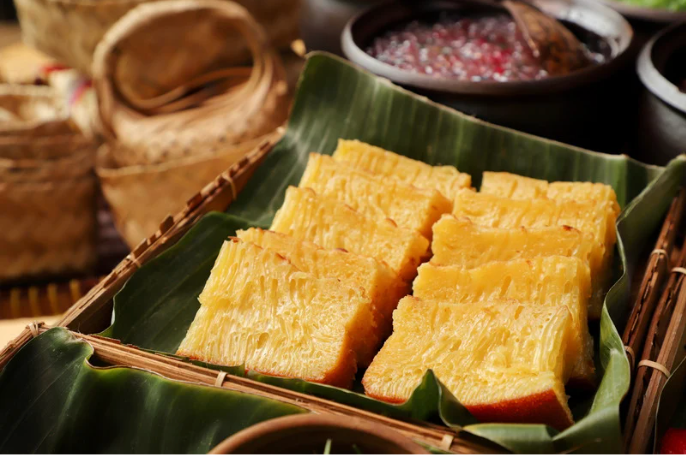
Bika Ambon is one of Medan’s defining food souvenirs. Its batter combines tapioca or sago with coconut milk, eggs, sugar, and aromatic citrus leaves. Fermentation creates the cake’s unmistakable honeycomb interior: springy, chewy, and fragrant rather than fluffy like a Western sponge.
The name causes endless confusion, but the cake is associated with Medan, not the Maluku island of Ambon. Indonesia’s official tourism website also identifies Bika Ambon as one of Medan’s iconic food souvenirs.
Timphan
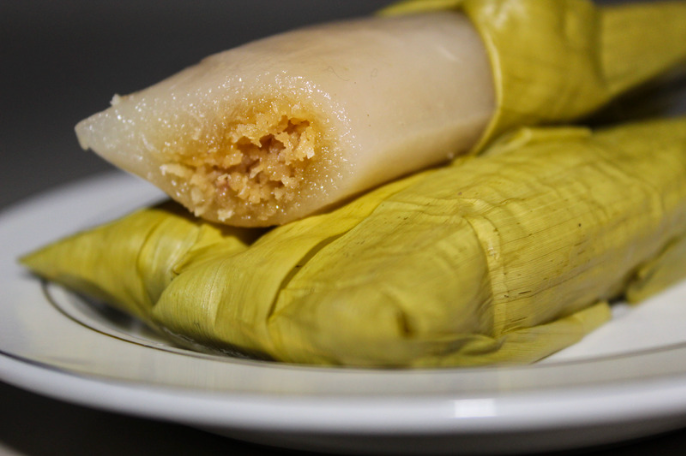
In Aceh, timphan is closely tied to Eid and the welcome offered to family and guests. A soft dough of glutinous rice flour, coconut milk, and mashed banana is filled with coconut or srikaya custard, then wrapped in young banana leaf and steamed.
The leaf gives it a gentle fragrance, while the cake itself stays supple and sticky. Timphan is sweet, but not aggressively so. More than an everyday snack, it is one of those foods whose importance becomes clearest when families gather.
Java
Java has such a large market-snack repertoire that choosing only two is almost unfair. Betawi, Sundanese, Central Javanese, Yogyakarta, East Javanese, and Madurese traditions all deserve their own guide. These two are a useful starting point because one tells a story of adaptation and the other shows how a recipe changes with language and place.
Bakpia Pathok
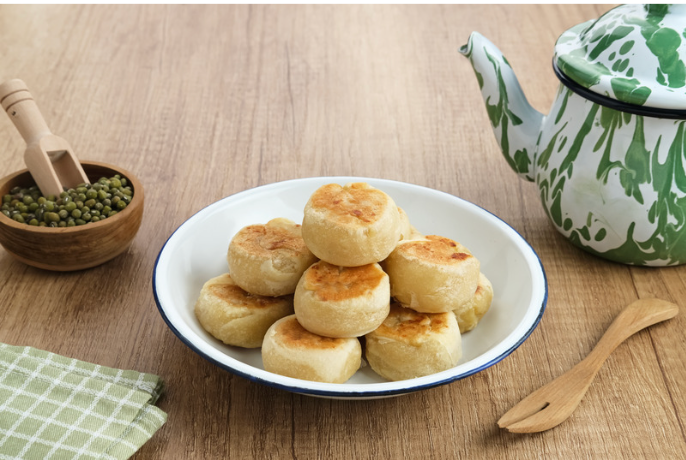
Bakpia Pathok is inseparable from Yogyakarta. The small, round pastries have a dry, flaky wheat shell and a smooth filling that was traditionally made from mung beans. Chocolate, cheese, coffee, and fruit versions now fill souvenir shops, but the classic mung-bean bakpia remains the reference point.
Bakpia is a Chinese-Javanese adaptation rather than a pastry that appeared in isolation. In Yogyakarta, the original form was reshaped around local ingredients and Muslim tastes. Today, a box of bakpia is practically shorthand for “I went to Jogja.”
Serabi or surabi
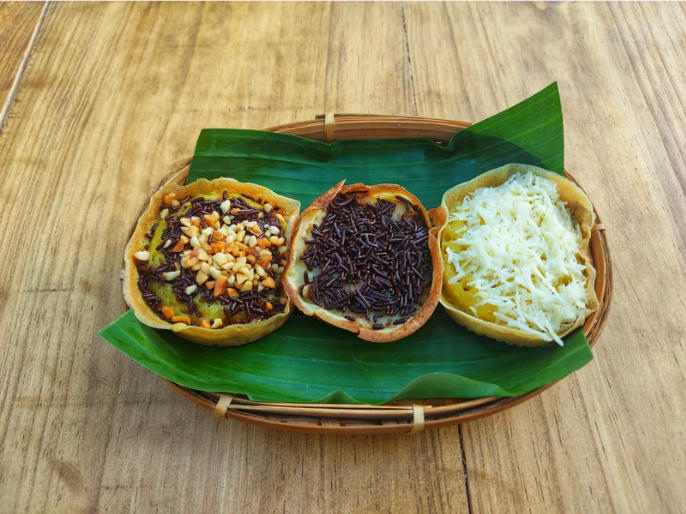
Travel between Bandung and Solo and the spelling changes along with the pancake. Sundanese surabi is made from rice flour and coconut milk in a small clay pan, giving it a smoky aroma and crisp rim. It may be sweet, savory, plain, or covered with modern toppings.
Serabi Solo is generally thinner and more tender, often scented with pandan and finished with rich coconut cream. They belong to the same broad pancake family, but treating them as interchangeable misses the point: the pan, batter, thickness, and way they are served all shift from one city to the next.
Bali and the Lesser Sunda Islands
In Bali, a cake may be an ordinary morning snack in one setting and part of an offering in another. Farther east, sweets reflect local ways of using rice, bananas, peanuts, palm leaves, and long-lasting ingredients suited to travel.
Laklak
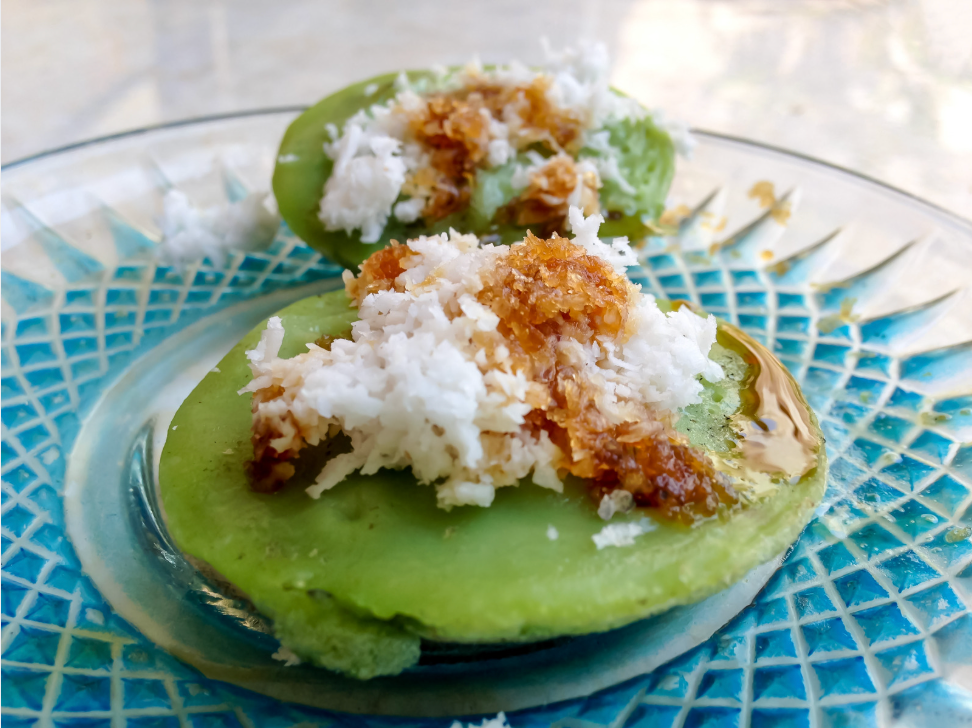
Laklak are small Balinese rice-flour pancakes, usually white or green from pandan or suji. They are cooked until soft and slightly springy, with a few crisp spots, then covered with grated coconut and dark palm-sugar syrup.
They are often compared with serabi because the two look related, but laklak has its own size, texture, and place in Balinese market culture. Look for them in the morning, when the coconut is fresh and the syrup is still warm enough to soak into the pancakes.
Jawada or kue rambut
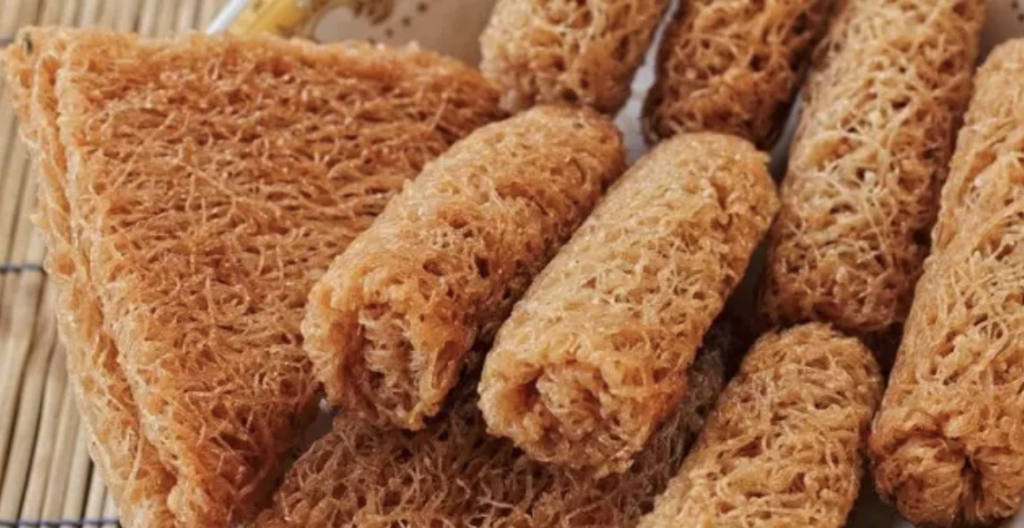
Jawada from Alor and Flores is also called kue rambut, or “hair cake,” for its fine, tangled strands. A batter of rice flour, tapioca, coconut milk, and sugar is poured through a perforated shell or mold into hot oil, creating a crisp, delicate lattice.
The name may sound playful, but the sweet can carry serious social meaning. In parts of Alor, particular forms appear at community and customary events, including mourning rites where food helps express kinship. That context belongs to the specific community; it should not be turned into a claim about every jawada made across East Nusa Tenggara.
Kalimantan
South Kalimantan’s Banjar communities have one of Indonesia’s richest documented cake traditions. West Kalimantan adds the Chinese-Indonesian and Malay influences of Pontianak, where chilled desserts are as important as baked ones.
Bingka Banjar
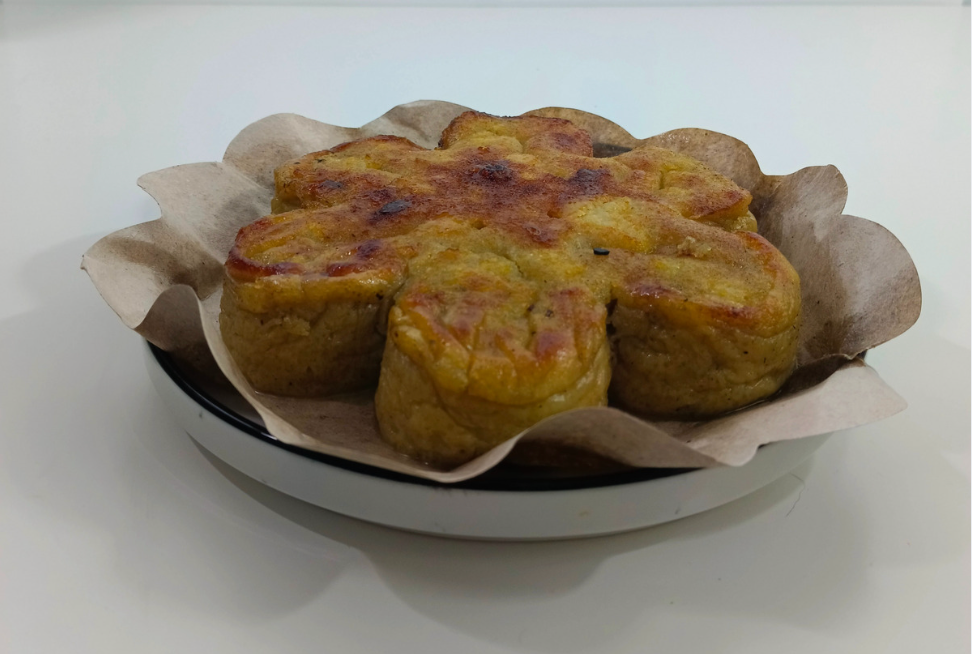
Bingka Banjar is dense, soft, and almost custardy, made from flour, eggs, coconut milk, sugar, and salt. Potato, pandan, pumpkin, and fermented-rice versions are common, each with a browned edge and a rich center.
It becomes especially visible during Ramadan, but bingka also belongs to weddings, thanksgiving gatherings, and the wider Banjar world of wadai. It is the opposite of an airy cake: a small slice feels substantial, and the coconut-and-egg flavor lingers.
Ce hun tiau
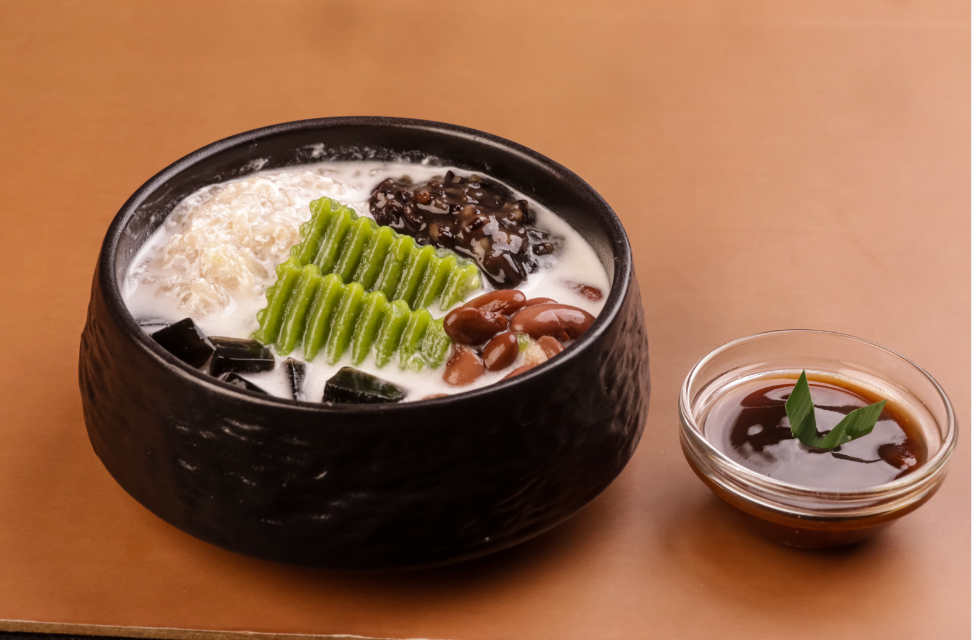
Pontianak’s ce hun tiau is not a neat slice of cake but a generous chilled bowl. Thin sago noodles may be joined by red beans, black glutinous rice, grass jelly, bongko, coconut milk, palm sugar, and ice. Sellers assemble it differently, which is part of the appeal.
The dessert comes from Pontianak’s Chinese-Indonesian food culture and is built for hot weather: slippery, chewy, creamy, cold, and filling all at once. Rather than searching for one “correct” composition, notice what each shop chooses to put in the bowl.
Sulawesi
Sulawesi’s sweets make cultural exchange especially visible. Manado’s Dutch-Indonesian baking sits beside Minahasan coconut cakes and Gorontalo’s ceremonial custards, while Bugis-Makassar kitchens turn bananas, glutinous rice, coconut milk, and palm sugar into an entirely different repertoire.
Klappertaart
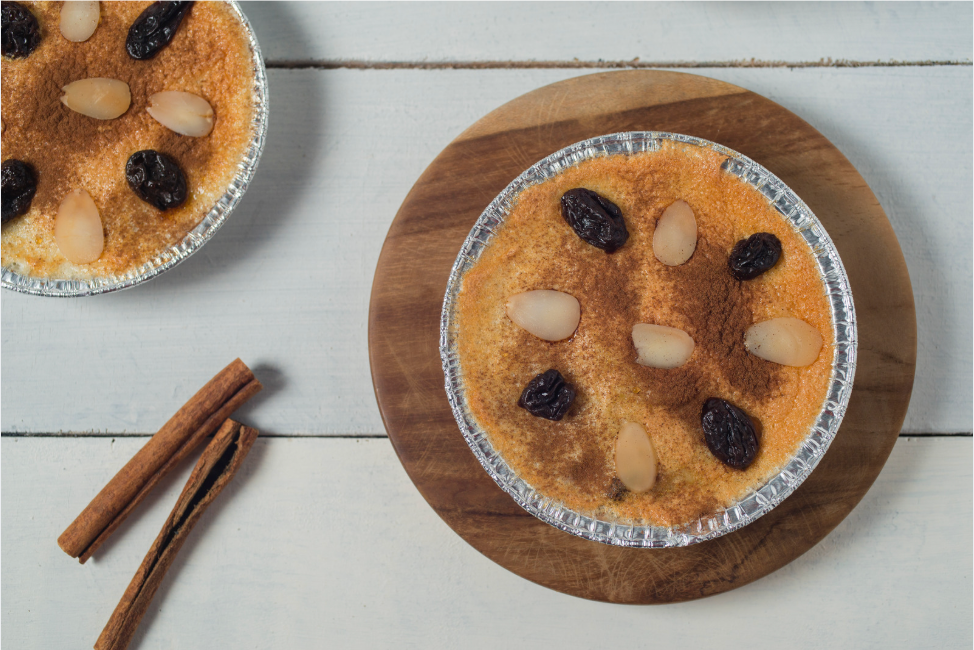
Klappertaart is Manado’s famous young-coconut dessert. Depending on the baker, it may arrive as a soft custard or a tender cake, usually enriched with milk, eggs, butter, cinnamon, raisins, and kenari nuts.
Its Dutch name points to colonial history, but calling it simply a Dutch import erases what happened afterward. Manado cooks made it local, adapting the bake around ingredients and tastes that became part of the city’s own food culture. It is now a celebration cake, bakery staple, and one of North Sulawesi’s best-known souvenirs.
Es pisang ijo
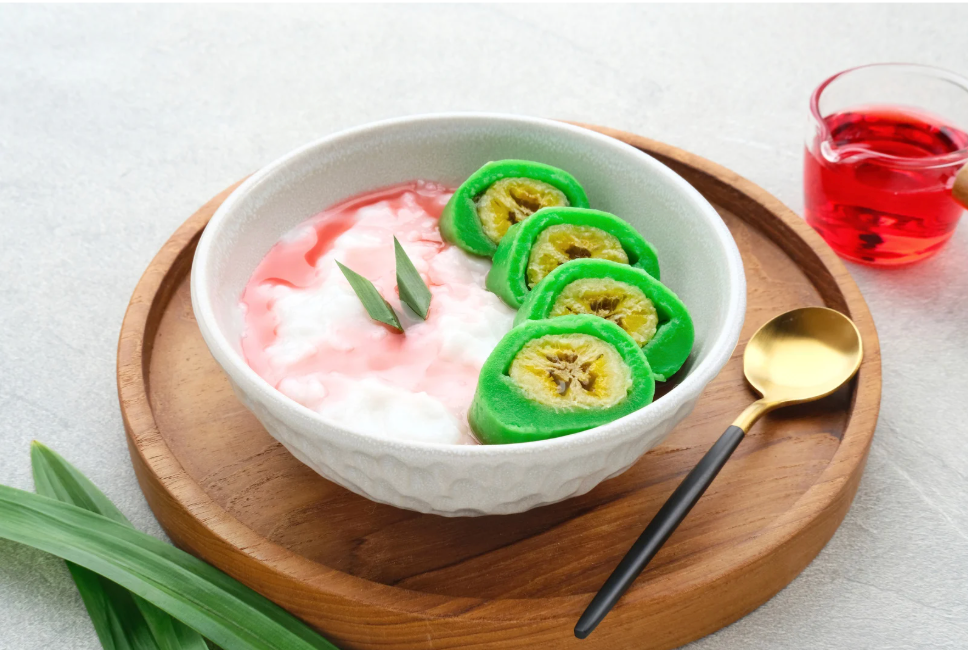
In Makassar, ripe banana is wrapped in a green pandan-scented rice-flour dough, sliced, and served with coconut-rice porridge, syrup, and ice. The result is colorful but also full of contrast: cold and creamy, soft and chewy, fruity and very sweet.
Es pisang ijo is found in dessert shops and at street stalls, and it becomes especially visible during Ramadan. Its close relative pallu butung uses steamed banana with a creamy coconut sauce but leaves off the green wrapper. They are related Makassar sweets, not two names for exactly the same bowl.
Maluku and North Maluku
Sago and kenari nuts give the sweets of Maluku and North Maluku a character that feels different from the rice-heavy west. The region’s old maritime connections also appear in spiced sweets with Middle Eastern roots.
Bagea kenari
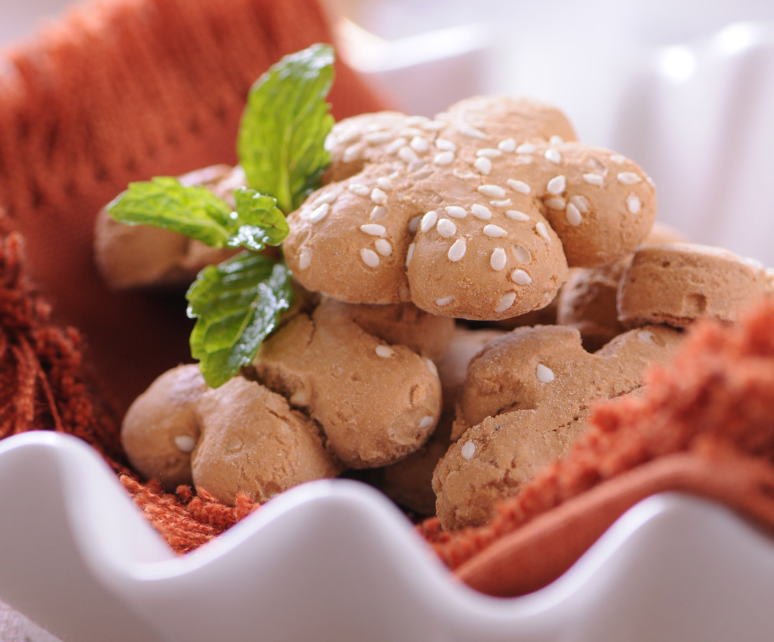
Bagea kenari is made with sago flour, kenari nuts, sugar, and warm spices such as cinnamon and clove. It is famously hard and dry: not a biscuit that crumbles at the slightest touch, but one that often needs to be softened in tea or coffee.
That texture once made bagea practical to keep and carry. Today it remains a household snack and souvenir associated particularly with Ternate and Ambon. The kenari gives it a deep nuttiness, while the spices echo the islands’ long history at the center of the spice trade.
Asida Maluku
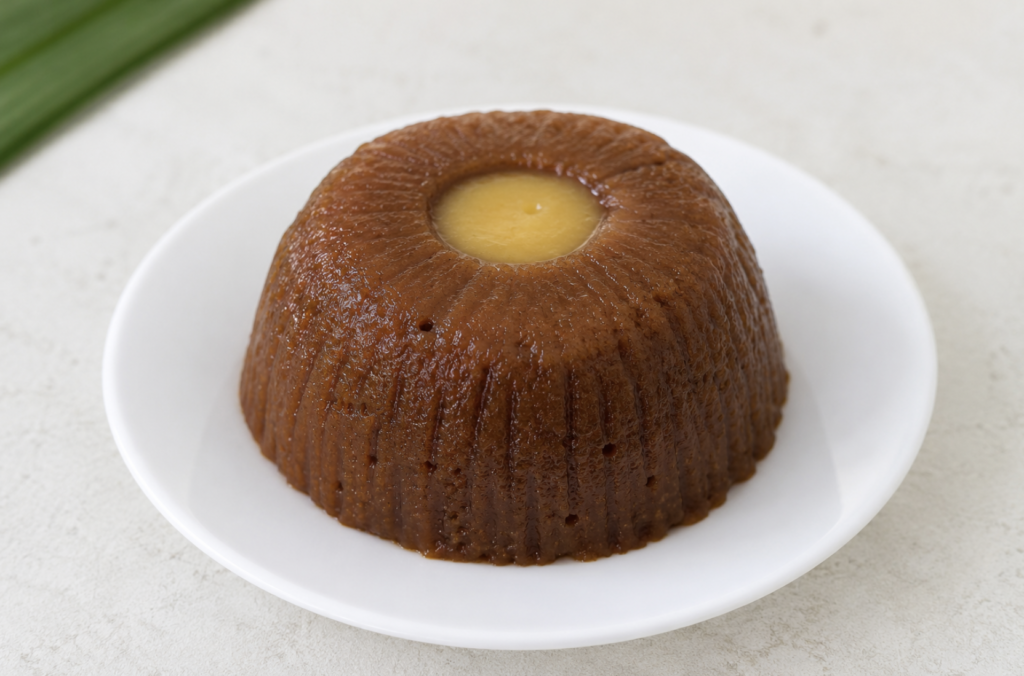
Asida is a thick, glossy sweet made from wheat flour, palm or brown sugar, butter or ghee, and spices. In Maluku’s Muslim communities, it is strongly associated with Ramadan and also appears at religious and family gatherings.
Related forms exist in Riau and Aceh, so asida should not be assigned to one province as though the recipe never traveled. The Maluku version has its own local life, just as Riau’s asidah may be served with a surprising garnish of fried shallots. Shared ancestry does not make the regional versions identical.
Papua and West Papua
Papuan sweets show why “local” should never be used as a synonym for “unchanged.” Sago and banana remain central to many foods, while introduced ingredients such as wheat, condensed milk, and eggs have also been absorbed into regional traditions.
Kue lontar
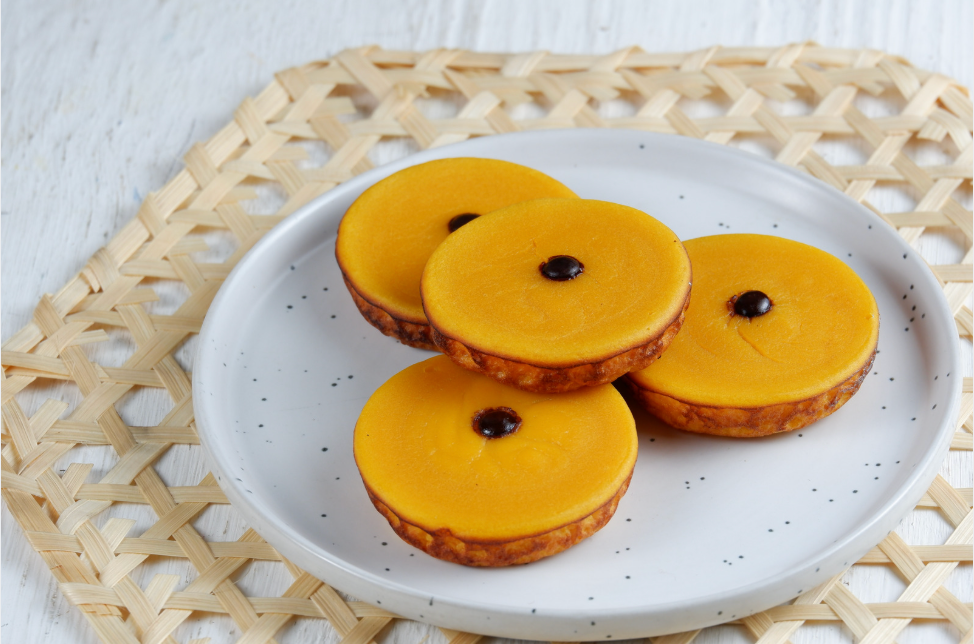
Kue lontar is strongly associated with Fakfak and is widely known across Papua. It resembles a milk tart, with a crisp wheat-pastry shell and a soft custard of egg yolk, condensed milk, sugar, water, and vanilla. It is usually made much larger than the small individual tarts a visitor might expect.
Papuan families serve it at Christmas, Eid, family gatherings, and when honoring guests. Its name is often said to come from the Dutch ronde taart, but that explanation is better treated as a tradition than a proven etymology. Whatever its linguistic origin, the tart’s place in Papuan homes is not in doubt.
Eurimoo
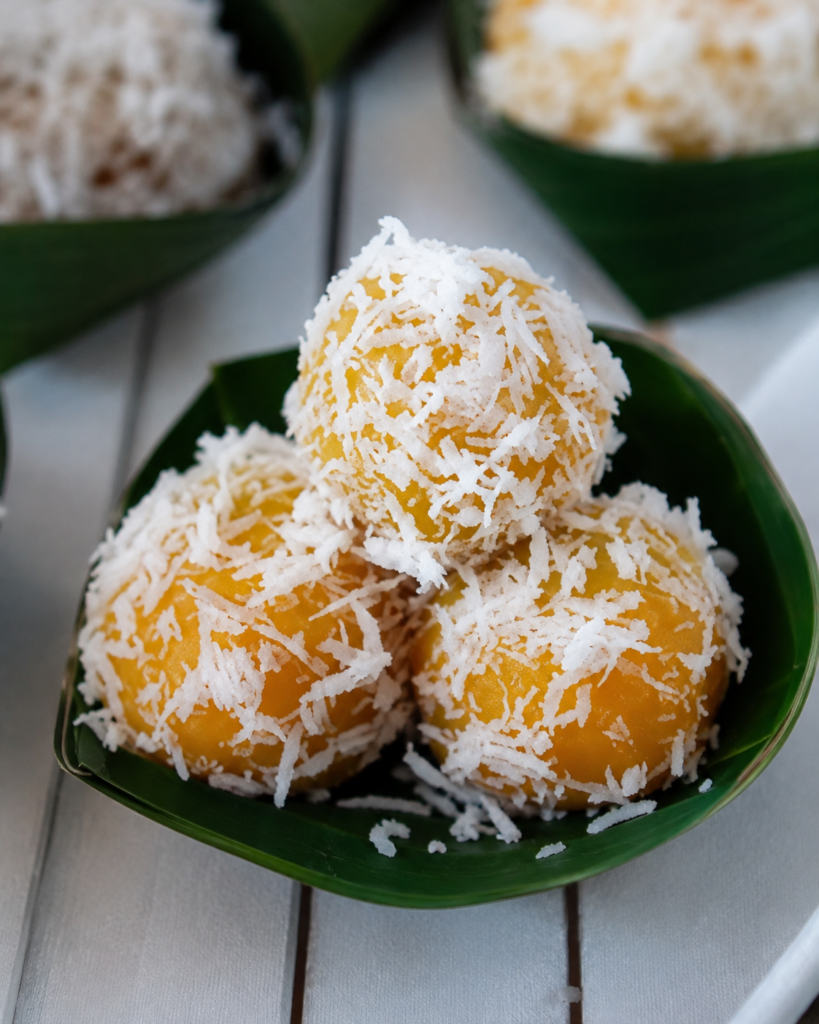
Associated with Timika and central Papua, eurimoo brings together sago, ripe banana, grated coconut, and a little salt. The mixture is formed into balls and boiled, producing a soft, chewy sweet with a gentle banana flavor and a fresh coconut coating.
It is eaten at family parties and can appear at weddings or customary gatherings, although the exact role varies and is best confirmed locally. Eurimoo is less visible in national souvenir shops than kue lontar, but it offers a much clearer taste of the sago-and-banana pantry that shapes everyday food in parts of Papua.
How to taste Indonesian desserts
Start with texture. Indonesian sweets can be elastic with glutinous rice, silky with coconut custard, brittle from frying, grainy with sago, or tangy from fermentation. Sweetness is only one part of the experience; banana leaves, pandan, toasted coconut, smoke, and palm sugar often matter just as much.
Morning markets are usually the best place to see the widest range of fresh jajanan pasar. Ramadan brings out another repertoire entirely, while regional bakeries are ideal for longer-lasting gifts such as bakpia, Bika Ambon, bagea, and klappertaart. If two vendors use different names or make the same sweet differently, that is not necessarily a mistake. It is often the most interesting part of the story.
Food can also be a useful way to shape an Indonesia itinerary. Indo by Design can build market visits, regional bakeries, and local dining into a journey without turning every day into a checklist of places to eat.
Want to explore beyond Indonesian desserts? From regional specialties to everyday dishes and street food, our Indonesian Food Guide explores what to eat across the archipelago.