
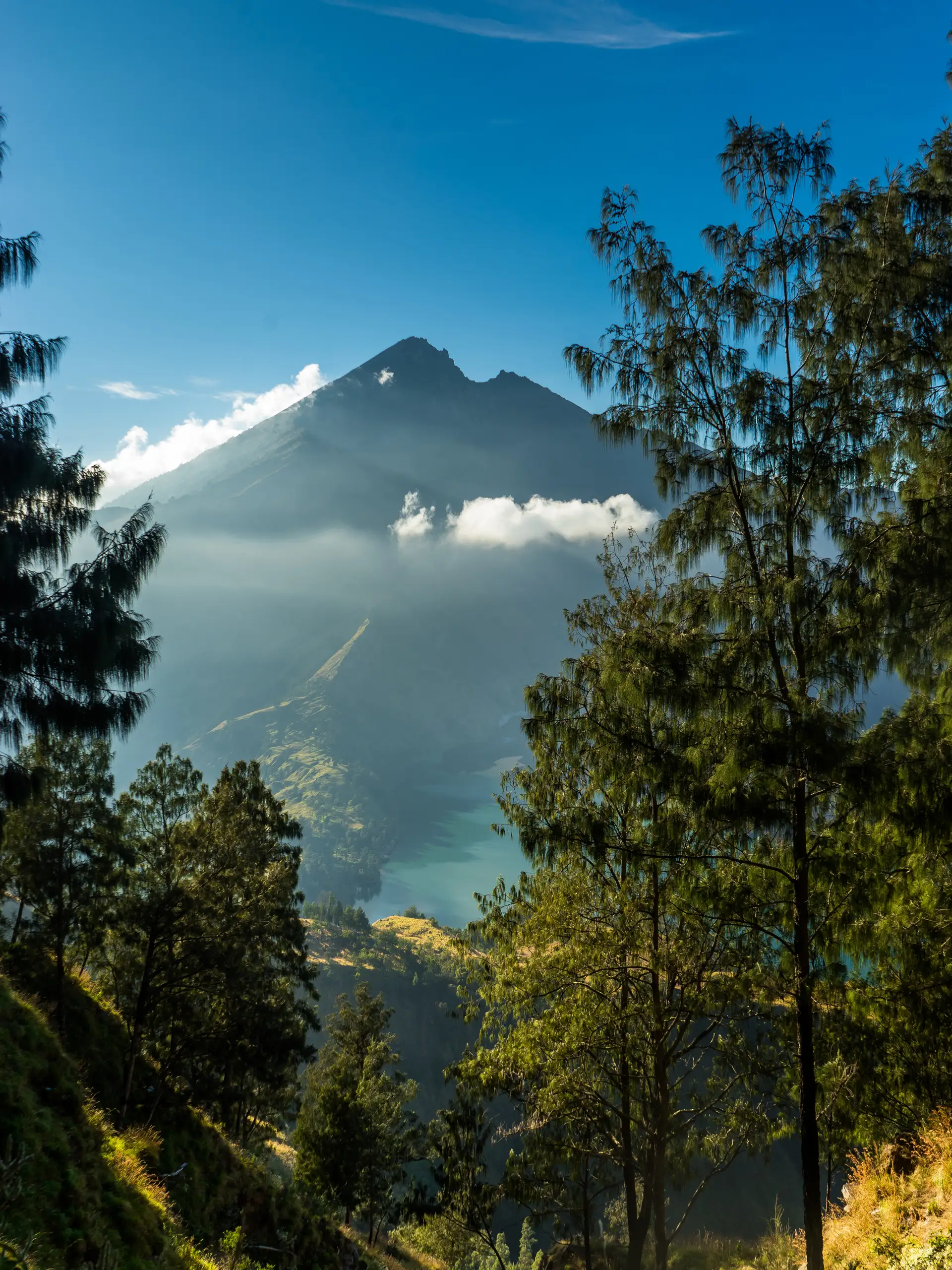
Mount Rinjani rises 3,726 meters above sea level. It is more than just an active volcano; for the people of Lombok, it is a spiritual symbol, and for trekkers around the world, it is a must-do adventure. As Indonesia’s second-highest volcano, Rinjani offers stunning views, from the turquoise Segara Anak crater lake to the distant outline of Mt. Agung in Bali.
But Rinjani is just as challenging as it is beautiful. This guide will help you prepare for your trek up the “Queen of Lombok.”
Table of Contents
1. When is the Best Time to Hike Mount Rinjani?
Mount Rinjani National Park operates on a seasonal schedule.
- Dry Season (April to December): This is the best time to hike. The skies are usually clear, and the trails are safer.
- Peak Season (July and August): Expect higher crowds and higher prices during these months.
- Closure (January to March): The park is usually closed during the peak of the rainy season for safety and to help the ecosystem recover.
2. Choosing Your Route
There are two main starting points for climbing the mountain, and each one gives you a different experience:
Sembalun (The Summit Route)
This route starts at 1,100 meters and leads you through open grasslands and savannahs. It’s the most popular option for hikers who want to reach the summit on the second morning.
- Pros: The summit rim is closer, and you’ll enjoy wide, open landscapes.
- Cons: It can get very hot during the day, and there is little shade.
Senaru (The Jungle Route)
This route begins at 600 meters and climbs through dense tropical rainforest. Most people use it for descending or for the “Crater Rim only” trek.
- Pros: The trail is shady and cool, and you get amazing views of the lake from the Senaru Crater Rim.
- Cons: The climb is long and tough, with lots of tree roots to navigate.
3. Popular Itineraries
You can’t hike Rinjani alone, and it’s not recommended anyway. You must hire a guide and get a permit.
- 2 Days / 1 Night (Crater Rim Senaru): This is a good choice if you have limited time or want an easier trek. You’ll reach the rim, see the lake, and return.
- 3 Days / 2 Nights (Summit & Lake): This is the most popular itinerary. You’ll climb to the summit, go down to the crater lake and hot springs, then hike back up to the other rim.
- 4 Days / 3 Nights: This option gives you a more relaxed pace, so you have extra time to enjoy the hot springs and the lake.
4. Physical Preparation
Don’t underestimate Rinjani. It’s a tough climb. The final push to the summit means hiking on loose volcanic ash and gravel, called “scree.” Sometimes, for every two steps forward, you slide one step back.
- Training: Work on your cardio with running or stair climbing, and build leg strength with squats and lunges. Start training at least 4 to 6 weeks before your trip.
- Altitude: Be aware of Altitude Sickness (AMS). Drink plenty of water and listen to your guide.
5. What to Pack
At the summit, temperatures can fall to 0°C (32°F), even though it’s warm and tropical at the base.
- Layers: Bring a moisture-wicking base layer, a fleece for warmth, and a windproof or waterproof jacket for the outer layer.
- Footwear: Wear hiking boots that are already broken in and have good ankle support.
- Headlamp: Essential for the 2:00 AM summit push.
- Trekking Poles: Highly recommended for steep descents, as they help protect your knees.
- Personal Care: Pack high-SPF sunscreen, lip balm, and wet wipes, since there are no showers on the mountain.
6. Respecting the Mountain
Rinjani is considered a sacred place.
- Leave No Trace: Litter is a big problem on the mountain. Make sure your trekking company follows the “Pack-In, Pack-Out” rule.
- Local Customs: Always show respect to your guides and porters. They are essential to the Rinjani experience and work hard to make your trek possible.
Climbing Mount Rinjani is a tough challenge that will push you to your limits. But when you reach the summit at sunrise and see the volcano’s shadow stretch across the clouds and sea, you’ll know every effort was worth it.
Are you ready for your adventure? You can book your permits through the e-Rinjani app or with a certified trekking organizer.
Follow us on Instagram: @indobydesign