
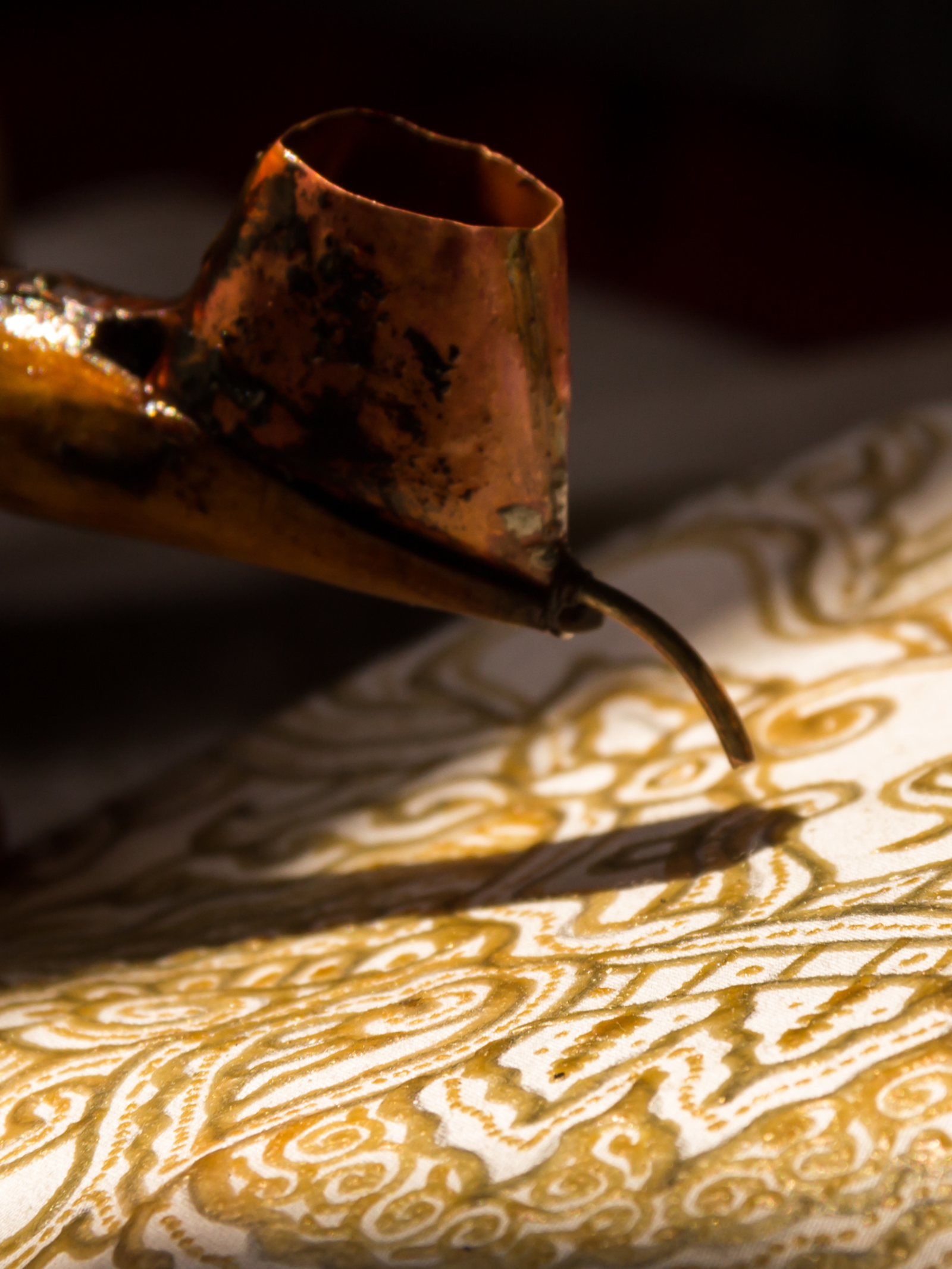
Making batik takes a special kind of patience.
The process starts with a piece of cloth, usually cotton or silk, stretched and hand-prepared. Next, wax is heated until it is just right and then carefully applied to the fabric using the narrow copper spout of a canting. One line is drawn, then another, and slowly a pattern takes shape.
In many parts of Indonesia, what looks like simple decoration is actually a language of its own.
Batik has been made across the Indonesian archipelago for centuries, but its traditions are especially deeply rooted in Java. From the royal courts of Yogyakarta and Surakarta to the coastal workshops of Pekalongan, Cirebon, and Lasem, generations of artisans have developed distinctive patterns, colors, and techniques shaped by the places in which they live.
To truly understand Indonesian batik, you need to look beyond the finished cloth. Its beauty comes not just from the patterns, but also from the time, skill, and cultural memory woven into it.
Table of Contents
Drawing With Wax
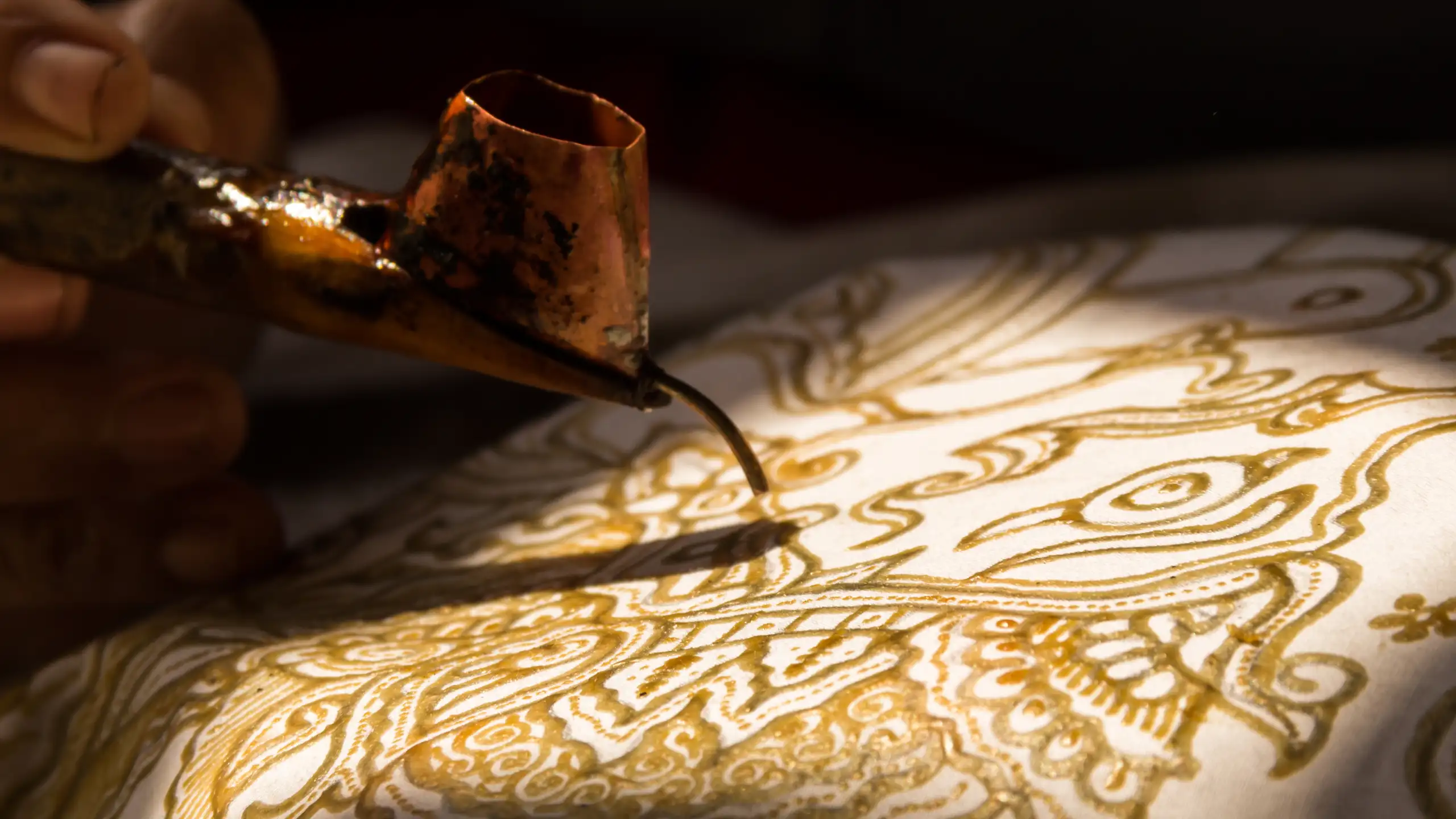
The word batik is closely associated with the process of creating patterns through wax-resist dyeing. In traditional hand-drawn batik, known as batik tulis, the artisan uses a canting to apply hot wax directly onto the cloth.
The wax stops the dye from reaching certain parts of the fabric. For more detailed designs, the cloth is dyed several times, with wax added and removed between rounds to create different colors and patterns.
This process takes time and patience.
A single piece of detailed batik tulis can take weeks or even months to finish. The artist’s hand must stay steady, but the work is never just mechanical. If you look closely at a hand-drawn batik, you might see small irregularities in the lines. These are not mistakes—they are signs of the person who made it.
Another traditional method, called batik cap, uses a copper stamp to apply wax in repeating patterns. This technique was created to make batik more quickly, but it still takes a lot of skill. The stamp is dipped in hot wax and pressed onto the cloth so the pattern lines up perfectly.
Both are traditional batik techniques, but the processes differ. Batik tulis is drawn by hand, while batik cap uses a copper stamp to repeat the pattern across the cloth.
A Cloth That Once Spoke Before Its Wearer Did
In Java, choosing batik was never just about picking a pretty pattern.
Certain motifs were once linked to royal courts, ceremonies, life stages, or specific social situations. The batik someone wore could show where they were from, what event they were attending, or the values tied to a design.
Some patterns also had deeper meanings.
The parang motif, recognized by its flowing diagonal forms, has long been associated with strength and continuity. Kawung, with its repeating geometric shapes, is one of Java’s oldest known batik patterns and has been linked to ideas of balance and self-control. Sido Mukti is traditionally associated with hopes for prosperity and happiness and is often connected with Javanese wedding traditions.
These meanings are not always the same. Batik traditions have changed over time, and people in different places may see patterns differently. Still, the main idea is that a pattern can mean more than just its looks.
A pattern can hold a wish, a value, a memory, or a feeling of belonging.
From the Courts to the Coast
The history of batik in Indonesia is also shaped by geography.
In the royal centers of Yogyakarta and Surakarta, classical batik grew within the culture of the Javanese courts. The colors were usually earthy and subtle, like deep browns, indigo, cream, and the warm shades from traditional soga dyes. The patterns followed long-standing traditions and were full of meaning.
On Java’s northern coast, batik took a different path.
Port cities were always busy places. Traders, migrants, and people from China, India, the Arab world, Europe, and other regions passed through or settled along Java’s coast. Their influences appeared in the batik designs.
Pekalongan is known for its colourful batik and wide range of patterns. Cirebon is famous for Mega Mendung, a cloud-inspired motif, while Lasem is known for its deep red colours and Chinese influences.
The differences between inland and coastal batik show something bigger about Indonesia. Culture here has always grown through movement, exchange, adaptation, and local ideas, not in isolation.
Batik is one way these histories are visible.
Colour From the Land
Before synthetic dyes were common, batik colors came from natural sources.
Indigo plants gave shades of blue. The bark and wood of certain trees made the brown tones known as soga. Other plants, roots, and natural materials were used to create colors that varied with local knowledge and availability.
Natural dyeing also takes patience. Colors are often built up slowly by dyeing, drying, and washing the fabric many times. The final color depends on the plants, the water, the fabric, and the dyer’s skill.
Today, many batik makers use synthetic dyes because they offer more colours and consistent results. However, some artisans and studios are returning to natural dyes as a more traditional and environmentally friendly option.
As a result, the tradition of batik continues to move between old knowledge and new ideas.
When a Tradition Becomes a National Symbol
Batik is often called one of Indonesia’s most recognizable cultural traditions. People wear it at weddings, ceremonies, in government offices, at work, and at both formal and casual gatherings. Someone might pick a special batik shirt for an important event, while a favorite batik sarong could be part of daily life at home.
In 2009, UNESCO added Indonesian batik to its Representative List of the Intangible Cultural Heritage of Humanity. This recognized not just the cloth but also the knowledge, techniques, symbols, and cultural practices that accompany it.
This recognition was important, but batik had already been a key part of Indonesian life long before any international group noticed it.
Batik has lasted because people keep using it.
Batik has survived because it was never just something to look at in a museum. People still wear it, make it, pass it down, collect it, and find new ways to use it. Modern Indonesian designers use traditional patterns in new styles. Young artisans try out new colors and techniques. Some families keep running businesses that have lasted for generations, while new studios are finding their own paths in the craft.
Like any tradition that is still alive, batik keeps changing.
Learning to Look More Closely
From afar, batik might just look like patterned fabric.
But when you look closely, you see something much more.
You notice the fine wax lines drawn by hand, the small differences between each repeated shape, and the spots where color has settled in its own way. Some symbols might stand out to one person but go unnoticed by another.
Behind all of this is the time spent making it.
There is time spent learning how to hold a canting, figuring out when the wax is just right, preparing dyes, repeating patterns, washing the cloth, and sharing knowledge from one generation to the next.
Maybe this is why you can’t fully understand batik just by looking at the finished cloth.
The cloth is what you see at the end. The real art is everything that came before.