
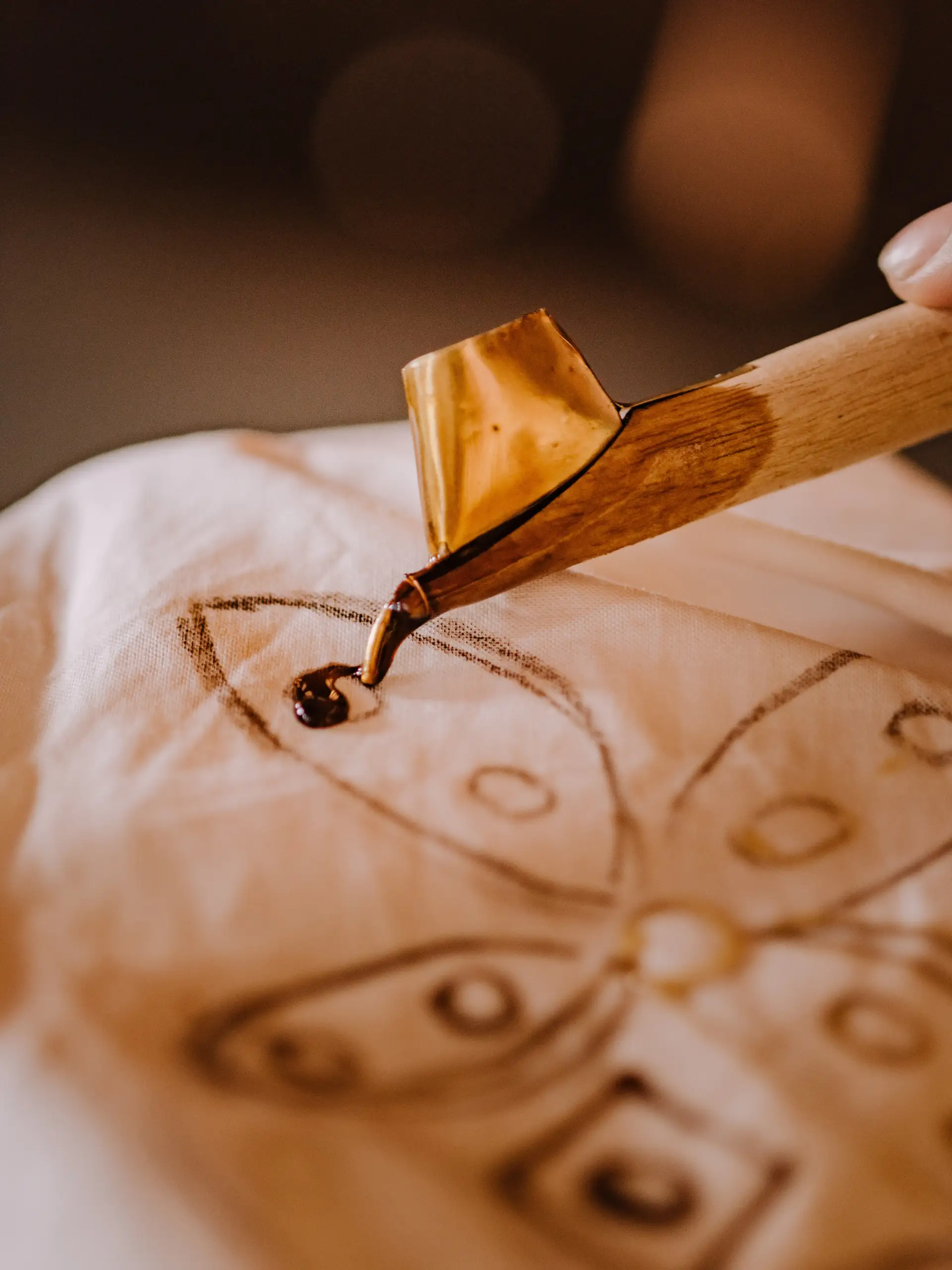
Batik is more than just a fabric; it is the soul of Indonesia. Recognized by UNESCO as a Masterpiece of Oral and Intangible Heritage of Humanity, this ancient wax-resist dyeing technique is a living tradition that carries the history, philosophy, and identity of the archipelago in every intricate pattern.
1. What is Batik?
The word “Batik” is derived from the Javanese words amba (to write) and titik (dot). It involves a process where melted wax is applied to cloth to resist dyes, creating complex designs through repeated cycles of waxing and dipping.
2. Tools of the Trade
Creating a piece of authentic Batik is a labor of love that requires specific tools:
- Canting: A small copper spout with a wooden handle used to “write” fine lines and dots with hot wax.
- Malam: The special wax mixture—usually a blend of paraffin and beeswax—that acts as the dye resistant.
- Wajan: A small stove and pan used to keep the wax at a constant liquid temperature.
- Cap: A copper stamp used in “Batik Cap” to apply wax patterns more quickly than hand-drawing.
3. Regional Styles and Philosophies
Batik patterns are rarely just decorative; they often signify the wearer’s social status, origin, or even a specific occasion.
Solo and Yogyakarta (Central Java)
Often considered the cradle of Batik, these regions favor earthy tones like deep browns (sogan), creams, and blacks.
- Parang: Once reserved only for royalty, this “machete” or “S-pattern” symbolizes power and perseverance.
- Kawung: A pattern of four intersecting circles representing a cross-section of a palm fruit, symbolizing justice and purity.
Pesisir (Coastal Batik)
Batik from coastal cities like Pekalongan and Cirebon is noticeably more vibrant and influenced by foreign cultures, including Chinese, Dutch, and Arabic styles.
- Mega Mendung: A famous cloud pattern from Cirebon that signifies patience and a “cool” head in times of trouble.
- Batik Pekalongan: Known for its bright colors and naturalistic motifs like birds and flowers.
4. Batik Tulis vs. Batik Cap
If you are looking to purchase Batik, it’s essential to know the difference:
- Batik Tulis (Hand-written): The highest form of the art. Each line is drawn by hand using a canting. Because it is handmade, there are slight irregularities, and the pattern is visible on both sides of the fabric.
- Batik Cap (Stamped): Created using copper stamps. It is faster to produce and more affordable, characterized by a more repetitive and precise pattern.
- Batik Print: Technically not “real” Batik. It is a textile printed with Batik patterns using industrial machinery and lacks the wax-resist process.
5. Modern Batik and Etiquette
While Batik was historically formal wear, it has seen a modern resurgence.
- Batik Fridays: In Indonesia, it is common for office workers and government officials to wear Batik every Friday.
- Formal Occasions: Batik is the standard attire for weddings, diplomatic meetings, and state functions. A high-quality Batik long-sleeved shirt is considered equivalent to a western suit and tie.
Tips for the Conscious Collector
When buying Batik, look for “Batik Tulis” to support local artisans and preserve the traditional craft. A single piece of Batik Tulis can take anywhere from a month to a year to complete, making it a true piece of wearable art.
Batik is a bridge between the past and the present—a tradition that continues to evolve while remaining anchored in its deep cultural roots.