
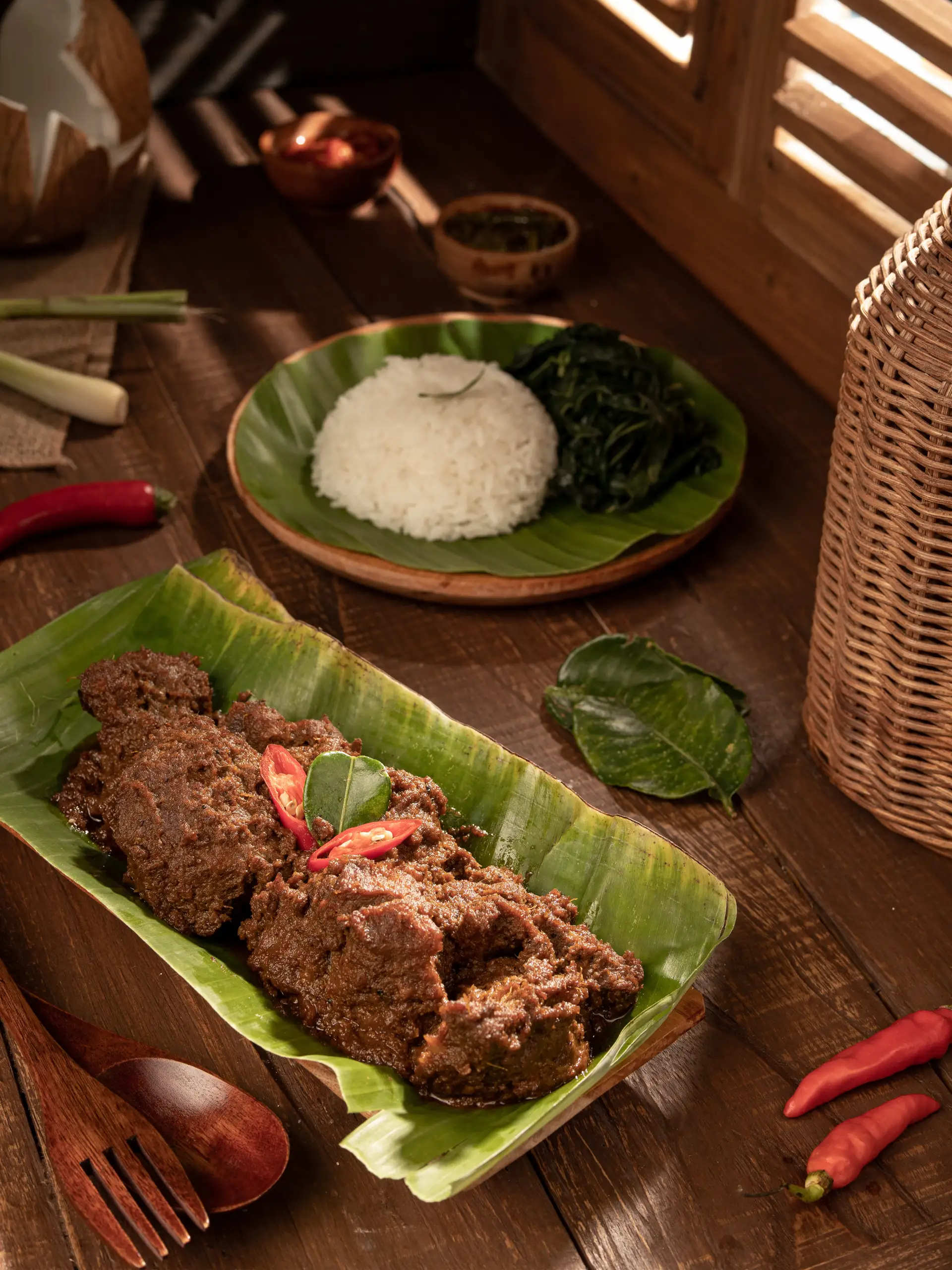
Indonesia is home to one of the most diverse culinary landscapes in the world. With more than 17,000 islands and hundreds of ethnic groups, every region across the archipelago has developed its own unique flavors, cooking techniques, and traditional dishes. From the rich and spicy cuisine of Sumatra to the savory soups of East Java, Indonesian food reflects centuries of cultural exchange and local tradition.
This guide explores some of Indonesia’s most iconic regional cuisines and the dishes that define them.
West Sumatra — The Home of Rendang
West Sumatra, particularly the Minangkabau region, is famous for bold spices, coconut milk, and slow-cooked dishes. The cuisine is known for its rich flavors and complex seasoning.
Signature Dishes
- Rendang — Slow-cooked beef simmered with coconut milk and spices until tender and deeply flavorful.
- Gulai — Curry-based dishes made with meat, fish, or vegetables.
- Dendeng Balado — Crispy beef served with spicy chili sauce.
Minangkabau restaurants, commonly known as Padang restaurants, can be found throughout Indonesia and are recognized by their iconic stacked plates displayed in windows.
Jakarta — A Blend of Cultures
As the capital city, Jakarta’s cuisine reflects a mixture of influences from Chinese, Arab, Indian, and indigenous Indonesian communities.
Signature Dishes
- Soto Betawi — Creamy beef soup made with coconut milk and spices.
- Kerak Telor — Traditional Betawi omelet cooked with glutinous rice and shredded coconut.
- Nasi Uduk — Fragrant coconut rice served with various side dishes.
Street food culture thrives in Jakarta, making it one of the best places to sample diverse Indonesian flavors.
Yogyakarta and Central Java — Sweet and Traditional
Central Javanese cuisine is generally sweeter compared to other regions, with palm sugar frequently used in cooking.
Signature Dishes
- Gudeg — Young jackfruit stew cooked with coconut milk and palm sugar.
- Bakmi Jawa — Traditional Javanese noodles cooked over charcoal.
- Tempe Bacem — Sweet marinated tempeh simmered with spices.
Yogyakarta is especially known for preserving traditional recipes and culinary heritage.
East Java — Bold and Savory Flavors
East Javanese cuisine is famous for stronger savory flavors and spicy dishes. The region offers hearty soups and unique local specialties.
Signature Dishes
- Rawon — Dark beef soup flavored with keluak nuts, creating its distinctive earthy taste.
- Rujak Cingur — Traditional salad mixed with vegetables, fruits, and sliced beef snout in shrimp paste sauce.
- Lontong Balap — Rice cakes served with bean sprouts, tofu, and savory broth.
Surabaya and Malang are popular culinary destinations in East Java.
Bali — Rich Spices and Ceremonial Cuisine
Balinese cuisine combines aromatic spices with fresh ingredients and traditional cooking methods often tied to religious ceremonies.
Signature Dishes
- Babi Guling — Roast suckling pig seasoned with Balinese spices.
- Ayam Betutu — Slow-cooked chicken stuffed with herbs and spices.
- Lawar — Mixed vegetables, coconut, minced meat, and spices.
Balinese food often features complex spice blends known as base genep.
Lombok — Spicy Sasak Cuisine
Lombok’s cuisine is heavily influenced by the Sasak people and is known for its fiery heat and grilled dishes.
Signature Dishes
- Ayam Taliwang — Grilled chicken coated in spicy chili sauce.
- Plecing Kangkung — Water spinach served with spicy tomato sambal.
- Sate Rembiga — Sweet and spicy beef satay.
Travelers who enjoy spicy food often consider Lombok one of Indonesia’s top culinary destinations.
South Sulawesi — Seafood and Strong Flavors
Makassar and the Bugis-Makassar culture have shaped the cuisine of South Sulawesi, where seafood and rich broths are common.
Signature Dishes
- Coto Makassar — Beef soup made with roasted peanuts and spices.
- Pallubasa — Thick beef stew traditionally served with egg yolk.
- Konro — Beef ribs cooked in dark aromatic broth.
The region is also known for fresh seafood dishes and grilled fish.
Papua — Simple and Natural Ingredients
Papuan cuisine relies heavily on local ingredients such as sago, fish, and root vegetables.
Signature Dishes
- Papeda — Sticky sago porridge served with fish soup.
- Ikan Kuah Kuning — Fish cooked in turmeric-based broth.
- Sago-based snacks — Traditional foods made from sago flour.
Papuan cuisine offers a unique perspective on Indonesia’s culinary diversity.
The Importance of Spices in Indonesian Cuisine
Spices play a central role in Indonesian cooking. Ingredients such as turmeric, galangal, lemongrass, ginger, coriander, and chili peppers create the layered flavors that define regional dishes.
Indonesia’s historical importance in the global spice trade also influenced the development of local culinary traditions for centuries.
Final Thoughts
Indonesia’s regional cuisines showcase the country’s incredible cultural and geographic diversity. Every island and city offers its own signature dishes, cooking traditions, and flavors shaped by local ingredients and history.
From the rich rendang of West Sumatra to the dark savory rawon of East Java, Indonesian food tells a story of heritage, community, and creativity. Exploring these regional cuisines is one of the best ways to truly experience Indonesia.